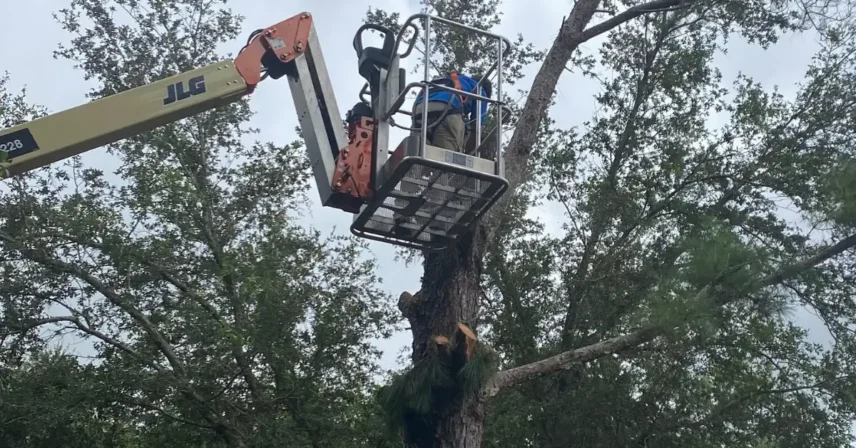
Every June 1st, hurricane season officially begins in Florida. But if you’re waiting until June to think about your trees, you’re already behind.
Here’s the comprehensive, month-by-month checklist for protecting your Pasco or Hillsborough County property from hurricane-related tree damage.
January-February: Assessment & Planning Phase
✅ Schedule Professional Tree Risk Assessment
What this involves: A certified arborist walks your property and evaluates:
- Tree species and age
- Structural integrity (trunk, branch unions, root system)
- Signs of decay, disease, or pest damage
- Proximity to structures and power lines
- Overall storm vulnerability
Why this timing: Tree services are slower in winter. You’ll get faster appointments and potentially better pricing than waiting until spring when everyone realizes hurricane season is approaching.
Cost: Most reputable services (including Grand Oaks) offer free assessments.
For Pasco County homeowners specifically: If you have mature laurel oaks (40+ years old) or Australian pines anywhere on your property, assessment is critical. These species are common in Pasco developments from the 1980s-1990s and are prime failure candidates.
For Hillsborough County homeowners: Older Tampa neighborhoods often have massive oaks and pines that predate modern building codes. These trees may be too close to homes by today’s standards and need professional evaluation.
✅ Review Your Homeowner’s Insurance Coverage
What to check:
- Tree removal coverage limits (often only $500-$1,000)
- Whether coverage requires tree to hit a structure
- Debris removal allowances
- Any exclusions for “preventable” damage
Why this matters: If your insurance company can prove you knew a tree was hazardous but didn’t remove it, they may deny your claim after it falls during a hurricane.
Action item: Document your professional tree assessment. If an arborist says your trees are healthy and properly maintained, that documentation protects you.
✅ Check County Records for Tree Permits
Pasco County: Visit the Development Services website or call 727-847-8140 to verify:
- Which trees on your property may require permits for removal
- Protected species designations
- Any previous permits or restrictions
Hillsborough County: Check the Planning & Development website or call 813-272-5600:
- Tree ordinance requirements for your zoning
- Protected tree registry
- Grand tree designations
Why this matters: You don’t want to discover during hurricane season that removing a hazardous tree requires a 3-week permit process.
March-April: Action Phase (The Critical Window)
This is your prime window for tree work. Pruning cuts heal best in spring, and you can complete work before the June 1 hurricane season start.
✅ Remove Identified Hazard Trees
Priority removals for Pasco & Hillsborough homeowners:
- Dead or dying trees Any tree that’s dead or in severe decline should be removed before hurricane season. Dead trees become brittle and break apart in high winds.
- Trees within “strike distance” of your home If a tree can reach your house when it falls, and it has structural problems, remove it now.
- Invasive species Australian pine, Brazilian pepper, and other invasives are weak-wooded and prone to failure. Remove them.
- Trees over critical infrastructure Trees directly above your electrical meter, AC unit, pool equipment, or septic system are high-risk if they fail.
✅ Strategic Pruning (Crown Thinning)
What proper hurricane prep pruning involves:
- Removing dead, diseased, or damaged branches
- Thinning the canopy to reduce wind resistance (NOT topping)
- Eliminating weak branch unions
- Reducing end weight on long horizontal branches
- Creating proper clearance from structures and power lines
What it does NOT involve:
- “Topping” trees (removing the top/leader)
- “Lion-tailing” (removing all interior branches leaving only end foliage)
- Removing more than 25-30% of canopy in one season
- Creating unbalanced weight distribution
Why certified arborists matter: Improper pruning actually makes trees MORE vulnerable to storm damage. Topping, in particular, creates weak regrowth that fails in moderate winds.
Specific recommendations for Tampa Bay trees:
Live Oaks: Light thinning only; don’t over-prune Laurel Oaks: Remove deadwood; evaluate structure Pines: Remove dead branches; minimize live canopy removal Palms: Remove only completely dead fronds (not yellowing ones)
✅ Address Root Zone Health
Healthy roots = better storm resistance. In March-April:
Do:
- Remove soil or mulch piled against trunks (“volcano mulching”)
- Ensure proper drainage around root zones
- Add appropriate mulch (2-3 inches maximum)
- Water deeply during dry spells to encourage deep root growth
Don’t:
- Compact soil over root zones (parking, storage)
- Sever roots for landscaping projects
- Change soil grade around established trees
- Allow construction equipment near root zones
Pasco County consideration: Sandy soil drains quickly, which is good for preventing standing water but bad for root establishment. Young trees especially need supplemental water to develop deep roots.
Hillsborough County consideration: Clay-based soils in parts of Hillsborough hold water longer. Watch for signs of root rot and ensure proper drainage.
May: Final Preparations
✅ Address Smaller Trees and Landscaping
Tasks for May:
- Stake young trees properly (but not permanently—remove stakes after 1-2 years)
- Secure decorative trees near lanais or pool enclosures
- Evaluate fruit trees (citrus, mango, avocado) for structural issues
- Remove weak or crossing branches from small ornamental trees
Remove or secure yard hazards:
- Hanging baskets and planters
- Decorative tree stakes or supports
- Tree swings or play equipment
- Any items attached to trees
✅ Document Your Property
Create a photo record:
- All trees, especially those near structures
- Recent pruning work
- Overall landscape condition
- Any existing tree damage or issues
Why this matters: Post-hurricane insurance claims require documentation. Photos taken before the storm prove what damage was storm-related vs. pre-existing.
Store documentation:
- Cloud storage (Google Drive, iCloud, Dropbox)
- Email to yourself
- Physical copy in your hurricane prep documents
✅ Prepare Your Hurricane Tree Emergency Kit
Keep these items accessible:
- Contact info for your tree service (Grand Oaks: (813) 592-5977)
- Your homeowner’s insurance info (policy number, agent contact)
- County emergency management numbers
- Pasco: 727-847-8137
- Hillsborough: 813-272-5900
- Utility company contacts (for trees on lines)
- Tarp and rope (temporary roof protection if tree damages house)
- Flashlights and batteries
- Camera or smartphone for post-storm documentation
June-November: Hurricane Season Monitoring
✅ Monthly Visual Inspections
Walk your property monthly during hurricane season:
- Look for new cracks in trunks or major branches
- Watch for sudden lean or soil heaving
- Check for new fungal growth at tree bases
- Monitor trees that were previously assessed
✅ When a Storm Threatens (5-7 Days Out)
Do NOT:
- Try to do last-minute major tree work yourself
- Call tree services for pruning (they’re prepping for emergency response)
- Remove trees without permits (even in an emergency, document first)
DO:
- Secure loose objects near trees
- Take fresh photos of all trees
- Review your emergency contacts
- Move vehicles away from vulnerable trees
- Identify safe rooms in your home (away from large trees)
✅ When a Storm Threatens (1-2 Days Out)
Tree services are now closed to routine work Focus on protecting yourself, not your trees.
Final steps:
- Bring all outdoor furniture, decorations inside
- Close hurricane shutters or board windows
- Identify which trees pose greatest risk to your home
- Plan where you’ll shelter if trees threaten structure
- Have emergency contact info ready
After the Storm: What to Do
✅ Immediate Post-Storm (Hours After)
Safety first:
- Stay away from all downed trees
- Assume all power lines are live
- Don’t walk under trees with hanging branches
- Keep children and pets away from damaged trees
Document damage:
- Photos and video from multiple angles
- Time/date stamps if possible
- Don’t move anything until documented
Contact in this order:
- 911 if immediate life-safety emergency
- Your insurance company
- Power company if trees on lines
- Your tree service for assessment and removal
County-Specific Checklist Items
Pasco County Only:
✅ Development Services Permit Check
- Verify tree removal permits if needed: 727-847-8140
- Environmental lands review for properties near preserves
- HOA approval for deed-restricted communities (Meadow Pointe, Wiregrass, Seven Oaks, etc.)
✅ Coastal Vulnerability Assessment If you’re in western Pasco (New Port Richey, Port Richey, Hudson):
- Consider storm surge impact on tree root systems
- Evaluate trees in flood-prone areas differently
- Saltwater intrusion can weaken trees after storm surge
Hillsborough County Only:
✅ Tampa Tree Protection Ordinance
- City of Tampa has stricter tree ordinances than unincorporated areas
- Protected tree permits required even for storm prep in some cases
- Grand tree designation affects removal options
✅ Urban Canopy Considerations Older Tampa neighborhoods with dense tree canopy:
- Falling branches can domino from tree to tree
- Power line interactions more complex
- Historic tree preservation may affect removal options
The Master Timeline
January-February: Assessment, planning, insurance review March: Major removals, permit applications April: Pruning, root zone care May: Final prep, documentation June 1: Hurricane season begins—shift to monitoring mode June-November: Monthly inspections, storm monitoring When storm threatens: Execute emergency plan After storm: Damage assessment, professional removal
Why This Checklist Works
This timeline is based on:
- 100+ years of Tampa Bay hurricane history
- Pasco and Hillsborough County emergency management protocols
- Certified arborist best practices
- Insurance claim requirements
- County permitting timelines
Following this checklist means you’re protected legally (documentation, permits), financially (insurance compliance), and physically (hazard removal before storms).
Let Grand Oaks Help You Check the Boxes
Going through this checklist alone is overwhelming. Grand Oaks Tree Service offers comprehensive hurricane prep packages for Pasco and Hillsborough County homeowners:
Package includes:
- Complete property assessment
- Prioritized removal recommendations
- Strategic pruning for wind resistance
- County permit coordination
- Documentation for insurance purposes
- Priority post-storm service
Start your checklist today: Schedule free assessment or call to discuss your property’s hurricane readiness.
Don’t wait until a storm is in the forecast. The best hurricane prep happens in the calm before the storm—literally.