Key Takeaways
- Rapid Progression: Lethal Bronzing can kill a mature palm in months if not diagnosed early.
- Vector Identification: The disease is spread by a tiny insect called a planthopper, making local outbreaks hard to contain.
- Species at Risk: While the Sabal (Cabbage) Palm is the primary host, Medjool and Sylvester Date palms are highly vulnerable.
- The Power of Injections: Oxytetracycline HCl injections are the only proven method to protect healthy palms in infected areas.
- Removal is mandatory: Once a palm tests positive and shows heart leaf death, it must be removed to protect the rest of your landscape.
The iconic skyline of Pasco County, from the coastal breezes of New Port Richey to the manicured estates of Wesley Chapel and the rolling groves of Dade City, is defined by its palm trees. Whether it is the native Sabal palm or the high-value Sylvester Date palm, these plants are the heartbeat of Florida’s curb appeal and ecological health. However, a silent killer is sweeping through our neighborhoods, moving from tree to tree with devastating speed. Formerly known as Texas Phoenix Palm Decline, Lethal Bronzing (LB) is a phytoplasma disease that has reached epidemic proportions in Central Florida. For a Pasco homeowner, understanding this disease isn’t just a matter of aesthetics; it is a matter of protecting a significant financial investment in your property.
What is Lethal Bronzing?
Lethal Bronzing is caused by a type of bacteria called a phytoplasma. Unlike traditional bacteria that might live on the surface of a leaf, this pathogen lives exclusively within the phloem, the circulatory system of the palm that transports sugars and nutrients from the fronds to the roots. Because it resides deep within the tree’s vascular tissue, you cannot simply spray a topical pesticide to cure it. The disease essentially clogs the tree from the inside out, leading to a slow starvation.
The disease is transmitted by a tiny insect known as the planthopper (Haplaxius crudus). These insects are incredibly common in Florida landscapes, often living in the turfgrass surrounding the palms. As these insects move from an infected tree to a healthy one to feed on the sap, they act as a biological needle, injecting the phytoplasma into the healthy palm. Once inside, the disease multiplies and begins to colonize the tree’s vascular system. Because the vector is so small and mobile, a single infected tree in a neighborhood can lead to dozens of infections in a matter of weeks.
Identifying the Symptoms in Pasco Palms
The challenge with Lethal Bronzing is that by the time it looks dead, it has likely been infected for months. Homeowners often mistake the early signs for simple nutrient deficiencies or drought stress. However, there is a specific, lethal sequence of decline that every property owner should monitor:
- Premature Fruit Drop and Flower Necrosis: If your palm is of reproductive age and suddenly drops all its fruit or flowers prematurely, this is often the very first sign of stress. The tree is essentially aborting its reproductive efforts to try to manage the internal infection. If you notice a carpet of green fruit under your palm outside of its normal shedding season, it is time for an inspection.
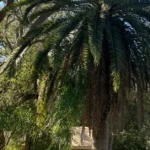
- The Bronzing of the Lower Canopy: As the name suggests, the defining symptom is a distinct reddish-bronze or chocolate brown color in the fronds. This begins with the oldest (bottom) fronds. Unlike potassium deficiency, which typically causes yellow spotting or frizzled tips, Lethal Bronzing turns the entire frond a solid, dark bronze color relatively quickly.
- Progression Toward the Canopy Heart: The discoloration moves upward through the canopy. As more fronds succumb, the tree begins to look like it is dying from the bottom up. By the time the middle-tier fronds are bronzed, the internal phytoplasma load is extremely high, and the tree’s vascular system is largely compromised.
- Death of the Spear Leaf: This is the point of no return. The spear leaf is the youngest, central upright frond that has not yet unfolded. It represents the heart or apical meristem of the palm. When the phytoplasma reaches this point, the spear leaf will turn brown and eventually collapse. Once the spear leaf is dead, the palm cannot produce new growth. At this stage, the tree is biologically dead, even if some lower fronds still appear green.
High-Risk Species in Our Region
While over 16 species of palms are susceptible, certain varieties in Pasco County are being hit harder than others. Understanding which species are in your yard is the first step in risk management.
- Sabal Palm (Cabbage Palm): Our state tree and the most frequent victim. Because they are so numerous in Pasco County, they act as the primary reservoir for the disease.
- Sylvester Palm (Silver Date Palm): These are the statement trees seen in many Wesley Chapel and Land O’ Lakes HOAs. They are extremely susceptible and can die in as little as 4 months after the first symptom appears.
- Medjool Date Palm: These are high-value trees often costing thousands of dollars to install. An LB infection in a Medjool is a major financial blow to a homeowner.
- Bismarck Palm: Known for its striking silver-blue fronds, this species is increasingly showing vulnerability in Central Florida.
- Pygmy Date Palm (Phoenix roebelenii): Often used in poolside landscaping, these small palms are also at risk.
The Role of Pasco County’s Environment
Pasco County’s geography plays a role in how this disease spreads. In areas with significant new construction, such as the North Tampa expansion, the movement of soil and nursery stock can inadvertently transport the planthopper vector. Furthermore, our sandy soils can lead to nutrient leaching, which weakens palms and makes them more susceptible to the stress caused by the phytoplasma.
The proximity of residential neighborhoods to natural wooded areas also creates a bridge for the disease. Infected wild Sabal palms in the woods provide a constant source of the phytoplasma for planthoppers to carry into manicured backyards. This is why a neighborhood-wide approach to palm health is often more effective than a single homeowner acting alone.
The Prevention Strategy: The Science of Tree Injections
Currently, there is no cure for a palm that has already reached the spear-leaf death stage. However, there is a highly effective preventative measure: Oxytetracycline HCl (OTC) trunk injections.
When administered by a professional using certified arborist standards, these injections act similarly to a vaccine. A small hole is bored into the trunk, and the antibiotic is injected under pressure or via a gravity-feed system. The tree then distributes the antibiotic through its phloem.
- Suppression: The OTC does not necessarily kill every phytoplasma cell, but it suppresses their ability to multiply, allowing the tree to maintain its vascular functions.
- Timing: In areas of Pasco County where Lethal Bronzing has been confirmed within a two-mile radius, it is recommended that healthy palms receive these injections every 3 to 4 months.
- Long-term Care: This is not a one-time fix. Because the planthopper vector is always present in the environment, the protective bubble must be maintained through a consistent schedule.
Why Immediate Removal May Be Necessary
If a palm is confirmed to have Lethal Bronzing and has reached the terminal stage (spear leaf death), it must be removed immediately. There are two primary reasons for this:
- Eliminating the Reservoir: A dying palm is a massive source of the phytoplasma. As long as it stands, it is a hot zone where planthoppers can pick up the disease and spread it to every other palm on your property or your neighbor’s property.
- Safety Hazards: Once a palm dies, the crown becomes unstable. Palm wood is fibrous, and once the heart rots, the heavy head of the tree can fall without warning, posing a significant risk to people, pets, and structures.
Proper disposal is critical. In Pasco County, we recommend that diseased palms be chipped or taken directly to a designated landfill. Letting the trunk sit in a debris pile on your property allows the insects to continue their life cycle in the proximity of your remaining healthy trees.
Professional vs. DIY: The Risks of Improper Care
Many homeowners try to save money by purchasing OTC kits online. However, improper injection techniques can lead to trunk rot, secondary fungal infections, or insufficient dosage. An arborist understands the correct height, depth, and pressure required for an injection to be effective. Furthermore, a professional can differentiate between L
Lethal Bronzing and other common Florida palm issues like Ganoderma Butt Rot or Thielaviopsis Trunk Rot, which require completely different management strategies.
In the face of an aggressive epidemic like Lethal Bronzing, your landscape requires more than just a gardener; it needs a specialist who understands the unique biological threats facing Pasco County palms. Grand Oaks Tree Service is a locally owned and operated authority in palm health, bringing over 15 years of experience to the fight against Lethal Bronzing. As Florida natives, our team knows that a Sylvester or Medjool palm is a valuable investment that deserves the highest level of protection. We utilize certified arborist standards to provide life-saving antibiotic injections and structural assessments that can catch disease before it’s too late.