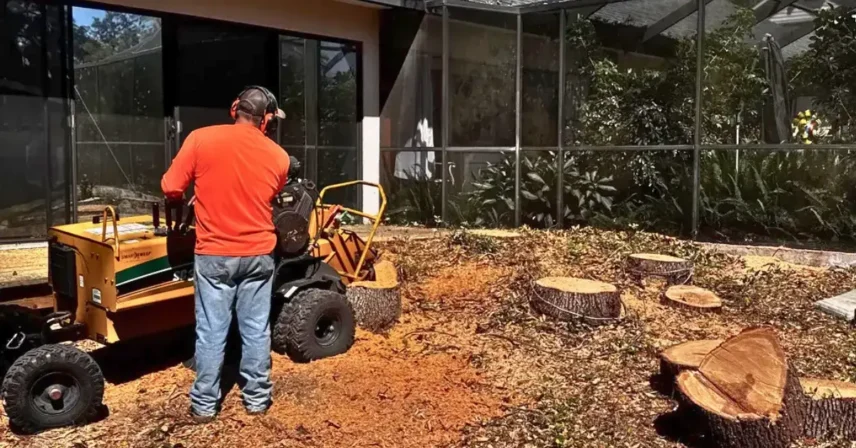
You’ve had the stump ground down, the chips cleaned up, and now you’re staring at a circular depression in your Wesley Chapel yard wondering, “Now what?” This is where the real opportunity begins. That spot where a tree once stood can become a beautiful, functional part of your Tampa Bay landscape with the right approach. Let’s explore creative, Florida-friendly solutions that work with our climate and local conditions.
Understanding Your Post-Grinding Landscape
Before jumping into planting, understand what you’re working with:
What Happens After Grinding:
- A depression 12-24 inches deep (depending on stump size)
- Wood chips mixed into the soil
- Possible soil compaction from equipment
- Root system still decomposing underground
- Potential soil chemistry changes from decomposing wood
Florida-Specific Considerations:
- High rainfall can wash away loose fill quickly
- Sandy soil may need amendment for planting
- Remaining roots may take 3-10 years to fully decompose
- Our growing season means quick establishment of new plants
Immediate-Use Solutions: Fill and Plant Within Weeks
Option 1: The Native Plant Garden
Turn that spot into a native plant showcase. Native plants thrive in our climate, require less water, and attract beneficial wildlife.
Perfect Florida Natives for Former Stump Sites:
- Coontie (Zamia pumila): Low-maintenance, drought-tolerant, attracts butterflies
- Firebush (Hamelia patens): Hummingbird magnet, vibrant orange flowers
- Muhly grass (Muhlenbergia capillaris): Gorgeous pink plumes in fall
- Beautyberry (Callicarpa americana): Purple berries, bird favorite
- Beach sunflower (Helianthus debilis): Yellow blooms, salt-tolerant
How to Prepare the Site:
- Fill the depression with 50/50 mix of native topsoil and compost
- Mound slightly higher than grade (Florida rains will compact it)
- Install plants in triangular or curved arrangement
- Mulch with 3-4 inches of cypress or pine bark mulch
- Water daily for first two weeks, then reduce to weekly
Option 2: The Butterfly and Pollinator Garden
Florida is a haven for butterflies, especially in spring and fall when northerners migrate through. Create a pollinator paradise.
Best Butterfly Plants for Tampa Bay:
- Milkweed species (Asclepias): Essential for monarchs
- Pentas (Pentas lanceolata): Non-stop blooms, butterfly favorite
- Porterweed (Stachytarpheta): Blue flowers, butterfly and bee attractor
- Salvia (Various species): Heat-tolerant, continuous bloomers
- Wild petunia (Ruellia): Purple flowers, spreads nicely
Design Tip: Group plants in clusters of 3-5 rather than single specimens. Butterflies are more attracted to mass plantings.
Option 3: The Raised Bed Garden
If the stump site is in a sunny spot, consider building a raised bed for vegetables or herbs.
Why This Works:
- You don’t need to worry about decomposing roots affecting crops
- Raised beds drain well (essential during Florida’s rainy season)
- Easier to control soil quality
- Extends growing season with better soil warming
Florida-Friendly Crops That Thrive Year-Round:
- Cool Season (Oct-Feb): Lettuce, broccoli, strawberries, herbs
- Warm Season (Mar-Sept): Tomatoes, peppers, squash, okra
- Year-Round: Basil, oregano, thyme, rosemary, hot peppers
Construction Tip: Use untreated pine, cedar, or composite materials. Pressure-treated lumber with copper compounds can leach into soil.
Medium-Term Solutions: Plant After 3-6 Months
Option 4: The Shade Tree Replacement
If you removed a tree, you likely removed shade—something precious in Florida. Replanting makes sense, but do it right.
Best Shade Trees for Former Stump Sites:
- Live Oak: Classic choice, long-lived, beautiful
- Red Maple: Fast-growing, gorgeous fall color (yes, even in Florida!)
- Southern Magnolia: Evergreen, fragrant flowers
- Bald Cypress: Native, deciduous, surprisingly adaptable
- Tabebuia: Stunning spring flowers, medium size
Critical Florida Planting Tips:
- Wait 3-6 months after grinding to let existing roots begin decomposing
- Don’t plant directly over the old stump location (shift 3-4 feet)
- Dig hole 2-3 times wider than root ball but no deeper
- Use native soil to backfill (don’t amend heavily)
- Stake only if necessary and remove stakes within one year
- Water deeply but infrequently to encourage deep rooting
Option 5: The Circular Flower Bed
Create a circular planting bed that mirrors the original stump footprint.
Design Approach:
- Define the circle: Use the natural depression as your guide
- Edge it: Install aluminum, steel, or stone edging
- Layer your plantings: Tall center, medium middle, low edges
- Choose Florida-tough perennials: Bromeliads, daylilies, lantana, croton
Color Combinations That Pop in Florida Sun:
- Tropical bold: Red ti plant, yellow croton, purple wandering jew
- Cottage garden: Pink pentas, white angelonia, purple salvia
- Native palette: Orange firebush, yellow coreopsis, purple beautyberry
Option 6: The Focal Point Feature
Turn the spot into an intentional landscape feature.
Ideas for Tampa Bay Yards:
- Birdbath garden: Install decorative birdbath surrounded by low groundcovers
- Gazing ball display: Colorful glass sphere on pedestal with ornamental grasses
- Rock garden: Use Florida limestone, coral rock, or river stones with succulents
- Small fountain: Self-contained bubbling fountain with tropical plants
- Statue or sculpture: Garden art surrounded by seasonal flowers
Maintenance Tip: Whatever feature you choose, ensure good drainage. Florida’s summer thunderstorms are legendary.
Long-Term Solutions: Transform the Entire Area
Option 7: The Extended Landscape Bed
Rather than treating the stump site as an isolated spot, incorporate it into a larger landscape renovation.
Design Strategy:
- Extend existing beds to include the stump site
- Create flowing, curved lines rather than circular patches
- Link to other landscape features (walkways, patios, other beds)
- Use the area to transition between lawn and hardscape
Wesley Chapel Consideration: Many newer developments have similar lot layouts. Creating continuous landscape beds can help your property stand out while reducing lawn maintenance.
Option 8: The Rain Garden
Florida gets 50-60 inches of rain annually. If your stump site naturally collects water, embrace it.
Perfect Plants for Florida Rain Gardens:
- Fakahatchee grass: Tolerates wet and dry
- Blue flag iris: Native, purple flowers, loves moisture
- Pickerelweed: Purple spikes, attracts butterflies
- Canna lilies: Tropical look, thrives in moisture
- Swamp milkweed: Pink flowers, monarch magnet
Site Preparation:
- Enhance the existing depression
- Create gentle slopes to channel water
- Layer soil with sand on top, clay below (creates natural percolation)
- Plant in zone-appropriate layers (wettest to driest)
Problem-Solving Florida Challenges
Challenge 1: The Site Won’t Stop Settling
Solution: This happens when large stumps continue decomposing. Keep adding topsoil every 2-3 months until stable. Plant shallow-rooted groundcovers in the meantime.
Challenge 2: Nothing Will Grow There
Solution: Likely soil issue. Test soil pH (might be too acidic from wood decomposition). Amend with lime if needed. Add quality compost. Wait another 3-6 months.
Challenge 3: Weeds Immediately Take Over
Solution: Florida weeds are aggressive. Thick (3-4 inch) mulch layer helps. For persistent problems, lay cardboard before mulching to smother weed seeds.
Challenge 4: Mushrooms Keep Appearing
Solution: Normal during root decomposition. Not harmful unless you have pets/kids who might eat them. They’ll stop once roots fully decay. Remove visible mushrooms promptly.
Challenge 5: Grass Won’t Fill In
Solution: If you’ve filled the depression intending to return it to lawn, Florida grass often struggles in disturbed soil. Consider patching with sod rather than seed (seed rarely works well in Florida). St. Augustine or Bahia sod establishes quickly.
Maintenance Calendar for Your New Landscape
First Month:
- Water daily (unless raining)
- Monitor for settling, add soil as needed
- Remove any emerging weeds promptly
Months 2-6:
- Reduce watering to 2-3 times weekly
- Fertilize new plantings with slow-release fertilizer
- Refresh mulch if needed
Months 6-12:
- Transition to drought-tolerant watering schedule
- Prune and shape plantings as they establish
- Add seasonal color with annuals if desired
Year 2+:
- Established plants need minimal care
- Refresh mulch annually
- Divide and transplant perennials as they spread
Working With Wesley Chapel’s HOA Requirements
Many Wesley Chapel communities have landscape standards. Before implementing your plan:
- Review HOA guidelines about plantings and features
- Check if approval is needed for landscape changes
- Confirm acceptable plant lists (some HOAs restrict certain species)
- Verify any color/material requirements for features
Most HOAs appreciate well-maintained landscape improvements, but getting pre-approval avoids future issues.
The Bottom Line: Turn Problem Into Opportunity
That depression where your stump once stood isn’t a problem—it’s an opportunity to enhance your landscape. Whether you choose a simple flower bed, an ambitious rain garden, or anything in between, the key is working with Florida’s unique climate and conditions rather than against them.
Choose plants that thrive in our heat and humidity, plan for our dramatic wet and dry seasons, and create something that reduces maintenance while increasing beauty. Your former stump site can become the best-looking spot in your yard.