Introduction
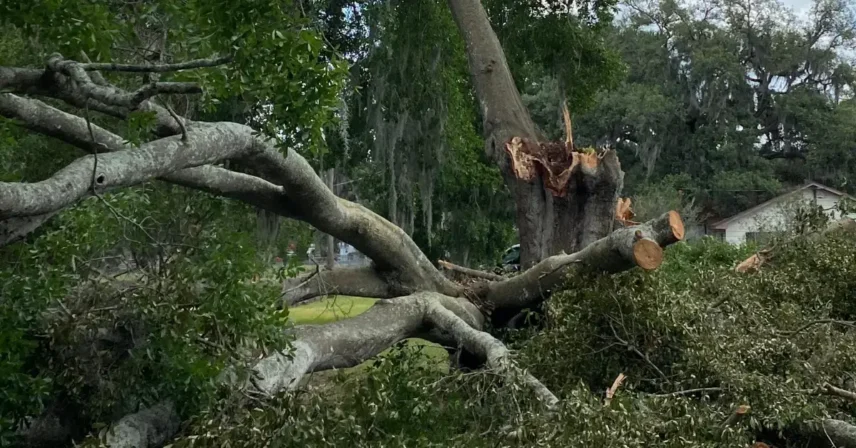
The hurricane has passed. You’ve weathered the storm in your home in Wesley Chapel, Land O’Lakes, or elsewhere in Pasco or Hillsborough County. As you step outside to assess the damage, the reality hits: your yard looks like a war zone.
Trees are down. Branches everywhere. Your neighbor’s tree is on your fence. Maybe a tree fell on your roof. The destruction is overwhelming, and you have one immediate question: “Now what?”
If you’ve never been through a major hurricane in the Tampa Bay area, the post-storm cleanup process can feel chaotic and confusing. This guide walks you through exactly what to expect, how long it takes, what resources are available, and how to navigate the often-frustrating weeks after a hurricane hits Pasco or Hillsborough County.
Immediate Post-Hurricane Priorities: The First 24-48 Hours
Before you even think about tree cleanup, handle these critical safety steps:
Safety First: Don’t Rush Outside
The Danger Period Isn’t Over:
- Downed power lines may be hidden under debris
- Hanging branches can fall without warning
- Structures weakened by trees may collapse
- Floodwaters may hide hazards
- Gas leaks from damaged lines
Wait For:
- Official “all clear” from emergency management
- Daylight (never inspect damage in the dark)
- Floodwaters to recede
Assess for Immediate Hazards
Once it’s safe to go outside:
Look For Life-Safety Issues:
1. Power Lines
- Downed lines across your property
- Lines contacted by fallen trees
- Sparking or smoking electrical equipment
If You See Downed Lines:
- Stay at least 35 feet away
- Assume ALL downed lines are live
- Call your utility company immediately:
- Duke Energy (Pasco County): 1-800-228-8485
- TECO (Hillsborough/Some Pasco): 1-877-588-1010
- WREC (Pasco County): 1-800-423-4832
- Never attempt to move lines or trees touching lines
2. Structural Damage
- Trees on your house making it uninhabitable
- Roof damage causing active leaking
- Broken windows creating security issues
- Compromised walls or foundation
3. Utility Damage Beyond Electric
- Gas smell (evacuate and call 911)
- Water line breaks
- Sewer backup
Document Everything Immediately
Even while everything is chaotic:
Photo Documentation (Critical for Insurance):
- Overall property damage (wide shots)
- Each fallen tree from multiple angles
- All damaged structures
- Tree root systems if exposed
- Branch damage to roof, cars, fences
- Street flooding if applicable
- Timestamp photos (most phones do this automatically)
Video Walkthrough:
- Narrate a video tour of all damage
- Explain what happened (“this oak tree fell during the storm and hit our roof”)
- Show context (where tree came from, what it damaged)
Written Notes:
- Date and approximate time of damage
- Description of the storm when damage occurred
- List of all damaged property
- Any witnesses
Why This Matters: Insurance claims can take weeks or months after major hurricanes. Detailed documentation NOW prevents disputes later.
Emergency Mitigation: What You Can (and Should) Do Now
Florida insurance law requires you to prevent further damage. This is called “mitigation.”
What You Can Do Without Waiting for Insurance Approval:
1. Tarp Roof Damage
- If tree damaged your roof and it’s safe to access
- Use tarps to prevent rain from causing further interior damage
- Save receipts—this is reimbursable
2. Board Up Broken Windows
- Prevents weather damage and theft
- Temporary solution until repairs
- Save receipts
3. Move Valuables
- Away from damaged areas
- Prevents further loss from weather exposure
4. Remove Water
- If rain is entering through damage
- Use towels, buckets, wet-vacs
- Prevents mold growth
What You CANNOT Do Without Insurance Approval:
- Permanent repairs
- Complete tree removal (in most cases)
- Replacing damaged structures
The Balance: You must prevent further damage, but you generally can’t make permanent repairs without adjuster approval. Call your insurance company ASAP to clarify what’s allowed.
Understanding the Post-Hurricane Tree Cleanup Timeline
After a major hurricane in Tampa Bay, tree cleanup doesn’t happen overnight. Here’s the realistic timeline:
Week 1: Chaos and Triage
What’s Happening:
Emergency Services:
- First responders clearing major roadways
- Utility companies working on power restoration
- Emergency management coordinating response
- Search and rescue operations (if needed)
Tree Services:
- All reputable companies are completely overwhelmed
- Prioritizing life-safety emergencies (trees on inhabited structures, blocking all access)
- Working 16+ hour days
- Crews from out of state arriving to help
What You’ll Experience:
If your situation is critical (tree on house making it uninhabitable):
- May get service within 1-3 days
- Emergency mitigation only (not full cleanup)
- Focused on making property safe, not cosmetic cleanup
If your situation is urgent but not life-safety (tree on garage, fence):
- Likely waiting 3-7 days
- Might get partial service (dangerous parts removed)
- Full cleanup comes later
If your situation is debris cleanup (branches, trees down but not on structures):
- Waiting weeks, possibly longer
- Low priority for tree services
- May need to rely on county debris removal
Week 2-3: The Frustrating Wait
What’s Happening:
Tree Services:
- Still working through life-safety backlog
- Beginning to address property-damage situations
- Scheduling is unpredictable (earlier jobs taking longer than expected)
- Phone lines overwhelmed with calls
County Response:
- Pasco and Hillsborough counties deploy debris removal operations
- Establishing collection schedules by area
- Hauling vegetative debris to designated sites
What You’ll Experience:
The Callback Waiting Game:
- You’ve called tree services multiple times
- Some aren’t even taking new calls
- Others promise callbacks that don’t come
- Scheduling is constantly changing
Common Frustrations:
- “They said they’d be here Tuesday, now it’s Friday and nothing”
- “I can’t get through to anyone”
- “How long am I supposed to wait?”
This Is Normal After Major Hurricanes: The demand is simply overwhelming. Patience is critical, though understandably difficult.
Week 3-6: The Cleanup Push
What’s Happening:
More Resources:
- Additional out-of-state crews arrive
- Emergency response teams from other states
- National Guard assistance (in some cases)
- Volunteer organizations (for homeowners who can’t afford services)
County Debris Operations in Full Swing:
- Regular pickup schedules established
- Multiple passes through neighborhoods
- Temporary dump sites operating
Tree Services:
- Working through backlog systematically
- Beginning scheduled non-emergency work
- Still extremely busy but more organized
What You’ll Experience:
If you haven’t gotten service yet:
- Tree services starting to reach non-emergency situations
- County debris pickup may handle your needs if tree isn’t on structures
If you got emergency service in week 1:
- Full cleanup and finishing work happening now
- Stump grinding scheduled
- Final bills and insurance documentation
Month 2-3: The Long Tail
What’s Happening:
Most Properties Addressed:
- Emergency and urgent situations resolved
- County debris operations winding down (but still operating)
- Tree services returning to more normal operations
The Stragglers:
- Some remote properties still waiting
- Complex jobs requiring special equipment
- Properties with access issues
Insurance Battles:
- Many homeowners fighting with insurance companies
- Delays in getting claim approvals
- Disputes over coverage
What You’ll Experience:
If You’re Still Waiting:
- This is unusual but happens
- Follow up persistently with tree services
- Consider county debris pickup if applicable
- File complaints if you’ve paid deposits and received no service
Debris Fatigue:
- You’re exhausted seeing debris piles everywhere
- County is still working but it feels slow
- Your neighborhood still looks like a disaster zone
Month 4+: Return to Normal (Mostly)
What’s Happening:
Visual Recovery:
- Most debris cleared
- County operations concluded
- Repaired structures
- Some properties still showing scars (stumps, damaged fences not yet repaired)
The New Growth:
- Damaged trees beginning to recover or showing they won’t
- Insurance claims mostly settled (or still battling)
- Community starting to look normal again
This timeline is based on major hurricanes (Category 2-4) that cause widespread damage to Pasco and Hillsborough Counties. Smaller storms resolve faster; larger catastrophic events take even longer.
How Pasco and Hillsborough Counties Handle Hurricane Debris
Understanding county debris removal helps you know what to expect:
Pasco County Hurricane Debris Program
How It Works:
Vegetative Debris Collection:
- County contracts debris removal companies after hurricanes
- They make multiple passes through neighborhoods
- Debris is collected from public rights-of-way (not your backyard)
What They Collect:
- Tree trunks and limbs
- Branches and twigs
- Palm fronds
- Other vegetative debris
What They DON’T Collect:
- Stumps (you’re responsible for grinding)
- Trees still standing but damaged
- Debris in your backyard (must be moved to curb)
- Construction debris
- Household garbage mixed with vegetative debris
Where to Place Debris:
Pasco County Requirements:
- Pile debris in public right-of-way (usually between sidewalk and curb, or roadside if no sidewalk)
- Separate vegetative debris from other materials
- Don’t block mailboxes, fire hydrants, or driveways
- Don’t pile against utility poles or equipment
- Keep piles manageable (large trees may need to be cut into sections)
Multiple Passes:
- First pass: Large debris
- Second pass: Smaller material, stragglers
- Third pass (if needed): Final cleanup
Timeline:
- First pass often begins 1-2 weeks after hurricane
- Multiple passes can take 1-2 months total
- Final pass may be 6-8 weeks after the storm
Stay Updated:
- Pasco County Emergency Management website
- Local news
- Nextdoor community updates
- County social media
Pasco County Emergency Management: (727) 847-8137 Debris Removal Hotline: (Activated after major storms—number announced via media)
Hillsborough County Hurricane Debris Program
How It Works:
Very similar to Pasco, with some operational differences:
Vegetative Debris Collection:
- County or contracted services collect from public rights-of-way
- Multiple passes through affected areas
- Focus on main roads first, then residential areas
What They Collect:
- Trees and limbs
- Shrubs
- Palm fronds
- Vegetative storm debris
What They DON’T Collect:
- Tree stumps
- Construction materials
- Appliances or furniture
- Bagged debris
- Regular household trash
Where to Place Debris:
Hillsborough County Requirements:
- Place in right-of-way between curb and sidewalk
- Separate vegetative debris from other materials
- Don’t block sidewalks, driveways, or street signs
- Avoid placing near utilities
- Cut large trees into manageable sections (typically 4-6 foot lengths)
Special Considerations:
- Tampa city limits may have slightly different procedures
- Unincorporated areas follow county guidelines
Timeline:
- Similar to Pasco: First pass within 1-2 weeks, multiple passes over 1-2 months
Stay Updated:
- Hillsborough County Emergency Management: (813) 272-5900
- County website and social media
- Local news stations
- 311 service line for specific questions
What If the County Won’t Take It?
Some situations don’t qualify for county debris pickup:
Trees in Your Backyard:
- County only collects from public right-of-way
- You must move debris to the curb yourself (or hire someone)
- If tree is too large to move safely, hire a tree service
Standing Dead Trees:
- County doesn’t remove trees still standing
- Even if hurricane killed it, you’re responsible for removal
Private Property Damage:
- Tree on your house, garage, fence: You handle removal (insurance may cover)
- County debris pickup is for general storm debris, not property damage situations
Working with Tree Services After a Hurricane
What to Expect from Legitimate Tree Services
During the Chaos:
Response Time:
- They’ll prioritize based on danger level
- They’ll be honest about when they can get to you (if they’re reputable)
- Don’t expect precise scheduling—earlier jobs often take longer than expected
Communication:
- Phone lines will be overwhelmed
- Callbacks may be delayed
- Text or email might get faster responses
- Be patient but persistent
Pricing:
- Emergency pricing is higher than normal (this is industry standard)
- Prices increase due to demand and resource scarcity
- Get written estimates when possible
- Beware of price gouging (prices 5-10x normal are suspicious)
Red Flags: Avoiding Hurricane Scammers
After every major Florida hurricane, scammers descend on affected areas:
Warning Signs of Scammers:
1. The “Truck and Chainsaw” Crew:
- Shows up unsolicited offering to “help”
- No business name, just a pickup truck
- Cash only, no receipts
- “We’re here from [another state] helping out”
Why This Is Risky:
- No insurance (you’re liable if they’re injured)
- No guarantee of quality work
- No recourse if they damage property
- May take deposit and disappear
2. The Deposit Demand:
- Requires large upfront payment or full payment before work
- Claims they need to “buy equipment” or “pay crew”
- Pressure tactics (“we can only hold this price today”)
Legitimate Services:
- May require reasonable deposit (25-50% is industry standard)
- Never demand full payment upfront
- Don’t pressure immediate decisions
3. The Too-Good-To-Be-True Price:
- Significantly cheaper than other estimates
- “We can do it for half what they quoted”
Reality:
- They’ll do inferior work
- They’ll add charges mid-job
- They won’t complete the job
- They might damage your property
4. No Documentation:
- Won’t provide written estimate
- No business license or insurance verification
- Can’t provide references
- No physical business address
How to Vet Tree Services Post-Hurricane
Even in the chaos, protect yourself:
Verify Before Hiring:
1. Check Licensing:
- Ask for business license number
- Verify with Pasco or Hillsborough County (online or by phone)
- Out-of-state crews should have temporary Florida licenses
2. Demand Proof of Insurance:
- General liability insurance
- Workers’ compensation insurance
- Call the insurance company to verify coverage is active
3. Get Written Estimates:
- Detailed scope of work
- Itemized pricing
- Timeline (even if approximate)
- Company contact information
4. Check Reviews:
- Google, Facebook, Nextdoor
- BBB rating
- Look for hurricane-specific experiences from previous storms
5. Ask About Insurance:
- Do they work with insurance companies?
- Will they provide documentation for claims?
- Can they wait for insurance payment? (Some will, some won’t)
Special Post-Hurricane Situations
Trees on Houses: The Emergency Situation
If a tree fell on your house during the hurricane:
Immediate Actions:
1. Safety Assessment:
- Is the house safe to occupy?
- Is there structural damage?
- Are utilities (electric, gas, water) compromised?
If Uninhabitable:
- Find temporary housing
- Document everything for insurance
- Emergency tree removal is highest priority
2. Emergency Mitigation:
- Tarp the roof if possible and safe
- Move valuables away from damaged area
- Call insurance company immediately
3. Emergency Tree Removal:
- Tree services will prioritize this
- They’ll remove enough to make the house safe and prevent further damage
- Full cleanup may come later
4. Structural Assessment:
- You may need a structural engineer before repairs
- Insurance might require this
- Don’t make permanent repairs before assessment
What It Costs:
- Emergency removal from structures: $1,500 – $10,000+ depending on tree size and complexity
- Your homeowners insurance should cover this (minus deductible) if it was a covered peril
- Some services require at least partial payment upfront even if insurance will cover
Trees on Power Lines: Who’s Responsible?
This confuses many homeowners:
The Rule:
Utility Company’s Responsibility:
- Power lines themselves
- Clearing lines so power can be restored
- Trees IN the lines that are preventing power restoration
Your Responsibility:
- The tree itself (even if it contacted power lines)
- Complete tree removal
- Cleanup after utility company clears the lines
The Process:
Step 1: Report to utility company (Duke Energy, TECO, or WREC)
- They’ll prioritize based on outage impact
- Major transmission lines get priority over individual service lines
- They’ll cut away what’s necessary to restore power
Step 2: Wait for utility company to clear lines
- Never attempt to remove trees from power lines yourself
- Wait for “all clear” from utility company
Step 3: Hire tree service to complete removal
- Once utility company has secured lines
- Tree service removes the rest of the tree
- You pay for this (or insurance does)
Common Misconception: “The utility company will remove the whole tree.” Reality: They clear their lines and that’s it. You handle the rest.
Neighbor’s Tree Fell on Your Property
The Florida Rule:
Act of Nature: If the hurricane caused a healthy tree to fall from your neighbor’s yard onto your property:
- You file with YOUR insurance, not theirs
- It’s considered an “act of nature” or “act of God”
- Your neighbor isn’t liable (unless they were negligent)
Negligence: If the tree was obviously dead/hazardous and you had previously notified your neighbor in writing:
- Your neighbor might be liable
- You’d need to prove negligence
- Usually requires legal action
- Still file with your insurance first; they may pursue your neighbor’s insurance (subrogation)
Practical Advice:
- Don’t fight with your neighbor over this during the immediate crisis
- File with your insurance
- Let insurance companies battle it out if there’s a liability question
- Focus on getting your property safe and cleaned up
Your Tree Fell on Neighbor’s Property
Flip Side of Above:
If your tree fell on your neighbor’s property during the hurricane:
- Your neighbor files with THEIR insurance
- You’re generally not liable (unless the tree was clearly hazardous and they can prove you knew)
- Be cooperative and neighborly
- Provide your insurance information if requested
- Don’t admit fault
To Avoid Future Issues:
- Maintain your trees properly
- Address hazardous trees proactively
- Document tree maintenance
- If a neighbor warns you about a dangerous tree, address it promptly and document everything
The Mental and Emotional Toll
Let’s acknowledge what’s rarely discussed:
Post-Hurricane Exhaustion Is Real
The weeks after a major hurricane are mentally and physically draining:
Common Feelings:
- Overwhelm from the scope of damage
- Frustration with slow progress
- Anxiety about costs and insurance
- Anger at delays or poor communication
- Exhaustion from decision-making
- Grief over lost trees (especially beloved old trees)
This Is Normal: You’re not overreacting. Hurricane recovery is genuinely stressful.
Take Care of Yourself:
- Accept that cleanup takes time
- Don’t try to do everything at once
- Ask for help from family, friends, community
- Take breaks from the recovery process
- Talk about your stress
Community Resources:
- Many churches and community organizations offer help
- Crisis counseling services activate after major disasters
- Your neighbors are going through the same thing—mutual support helps
Preparing for the NEXT Hurricane (Because There Will Be One)
Once you’re through this cleanup, prepare for the future:
Pre-Hurricane Season (April/May):
1. Tree Assessment:
- Hire an arborist to inspect trees
- Identify hazardous trees
- Remove or trim vulnerable trees
- Document healthy trees (helps with insurance)
2. Establish Tree Service Relationship:
- Choose a tree service before you need them
- Get their emergency number
- Consider pre-scheduling annual maintenance
- They’ll prioritize existing customers after storms
3. Review Insurance:
- Understand coverage limits
- Know your deductible (including named storm deductible)
- Document your property with photos
- Consider increasing coverage if needed
4. Create a Plan:
- Know what you’ll do if trees damage your property
- Have emergency contacts saved in your phone
- Keep important documents in waterproof container
- Plan for temporary housing if needed
During Hurricane Season (June-November):
When a Storm is Forecast:
- Trim loose branches if there’s time (3+ days out)
- Secure outdoor items that could become projectiles
- Photograph your property (before/after comparison)
- Review your emergency plan
Don’t:
- Wait until last minute to remove trees (tree services won’t be available)
- Ignore mandatory evacuation orders
- Try to do major tree work yourself 24-48 hours before storm
Resources for Pasco and Hillsborough County Residents
Emergency Management:
- Pasco County Emergency Management: (727) 847-8137
- Hillsborough County Emergency Management: (813) 272-5900
Utility Companies:
- Duke Energy: 1-800-228-8485
- Tampa Electric (TECO): 1-877-588-1010
- Withlacoochee River Electric Cooperative: 1-800-423-4832
County Services:
- Pasco County 311: Non-emergency services and information
- Hillsborough County 311: (813) 272-5900
Disaster Assistance:
- FEMA Disaster Assistance: 1-800-621-3362 or DisasterAssistance.gov
- Florida Division of Emergency Management: FloridaDisaster.org
Insurance Issues:
- Florida Department of Financial Services: 1-877-693-5236
- Consumer helpline for insurance questions and complaints
Community Resources:
- United Way of Pasco County: 2-1-1 (free crisis counseling and resource referral)
- Crisis Center of Tampa Bay: (813) 964-1964
Why Choose Grand Oaks for Post-Hurricane Cleanup
When the next hurricane impacts the Tampa Bay area, Grand Oaks Tree Service will be here for our community:
Our Post-Hurricane Commitment:
✓ Local Priority: We’re based in the Tampa Bay area. Our families live here. We prioritize our local community—Pasco and Hillsborough County residents—over out-of-area work requests.
✓ Systematic Triage: We assess all emergency requests and prioritize based on safety:
- Life-safety situations (injuries, people trapped, imminent danger)
- Habitability issues (trees on occupied structures)
- Access blockages (trees blocking only exit)
- Property damage (trees on unoccupied structures)
- Cleanup and debris (trees down but not threatening structures)
✓ Honest Communication: We won’t promise what we can’t deliver. If we’re booked for three days, we’ll tell you three days, not “we’ll be there tomorrow.” We’ll update you if timelines change.
✓ Fair Pricing: Emergency pricing is higher—we’re transparent about that. But we don’t price-gouge during declared emergencies. Our pricing is fair and competitive for the circumstances.
✓ Full Insurance Assistance: We’ve worked with hundreds of insurance claims. We provide:
- Detailed photo documentation
- Written assessments and reports
- Itemized estimates that satisfy insurance requirements
- Direct communication with adjusters when needed
✓ Complete Service: From emergency tree removal to complete debris cleanup to stump grinding to helping you select and plant replacement trees—we see projects through.
✓ Year-Round Relationship: We’re not storm-chasers who disappear after the work is done. We’re here year-round for maintenance, follow-up work, and the next storm.
Get Prepared Before the Next Storm
Don’t wait for a hurricane warning to think about tree hazards.
Schedule a pre-hurricane season tree assessment with Grand Oaks Tree Service:
What We’ll Do:
- Inspect all trees on your property
- Identify hazards (dead trees, dangerous branches, poor structure)
- Provide written risk assessment
- Recommend specific actions (removal, trimming, cabling)
- Give you documentation for insurance purposes
Pre-Season Tree Services:
- Hazardous tree removal
- Strategic trimming to reduce wind resistance
- Dead branch removal
- Tree health assessment and treatment
Save Our Emergency Number NOW: Put Grand Oaks in your phone before you need us: [Your 24/7 Emergency Number]
Serving Wesley Chapel, Land O’Lakes, Lutz, Zephyrhills, New Tampa, and all of Pasco and Hillsborough Counties.
Schedule Pre-Hurricane Assessment | 24/7 Emergency Service | Contact Grand Oaks
Don’t wait — schedule a tree inspection to ensure your property is safe and your trees are healthy.