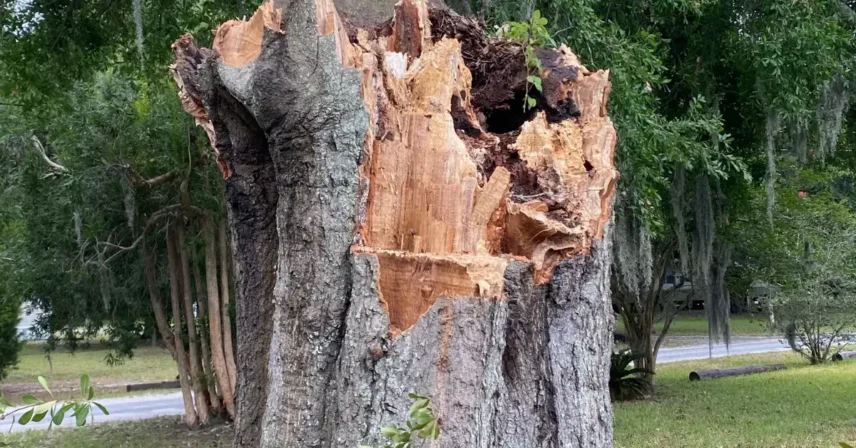
Florida’s warm, humid climate is perfect for tree diseases. Fungal infections, bacterial problems, and pest infestations can devastate your landscape trees if you don’t catch them early.
Here are the most common tree diseases we see in Pasco and Hillsborough County — and what to do about them.
Laurel Wilt Disease
Spread by the redbay ambrosia beetle, this fungal disease attacks redbay, swamp bay, sassafras, and avocado trees.
What to Watch For
- Rapid wilting — leaves turn brown or black while still attached
- Dark staining in the sapwood when bark is peeled back
- Tiny beetle entry holes with sawdust-like frass
What to Do
There’s no cure. Infected trees should be removed and the wood destroyed to slow the spread. Don’t transport infected wood to new locations.
Ganoderma Butt Rot
One of the most common and dangerous tree diseases in Central Florida. Affects both palms and hardwoods.
What to Watch For
- Shelf-like fungal growths (conks) at the trunk base
- White, spongy texture inside the lower trunk
- Gradual canopy thinning or yellowing fronds
- Leaning or instability
What to Do
By the time you see conks, the decay is extensive and irreversible. No chemical treatment exists. Most affected trees need removal. Don’t plant a replacement palm in the same spot — the fungus persists in the soil.
Lethal Bronzing
A fatal palm disease spread by tiny planthoppers. It’s killed thousands of palms across Central Florida.
Susceptible species include Christmas palms, coconut palms, date palms, and sabal palms.
What to Watch For
- Premature fruit drop
- Flower stalks turning black
- Lower fronds turning bronze, progressing upward
- Complete canopy collapse within 3–6 months
What to Do
Early-stage palms can sometimes be treated with antibiotic injections every 3–4 months. But treatment only suppresses the disease — it doesn’t cure it. Advanced cases require removal.
Hypoxylon Canker
Attacks stressed oaks weakened by drought, root damage, or construction.
What to Watch For
- Bark falling off in large patches
- Dark, crusty fungal structures on exposed wood
- Branch dieback starting at the crown
- Rapid decline in a single growing season
What to Do
Keep your oaks healthy — water during dry spells, avoid root damage, don’t compact soil over root zones. Once advanced symptoms appear, removal is usually the only option.
How to Prevent Tree Disease
You can’t control everything, but these steps help:
- Water trees deeply during dry spells (November–May)
- Don’t wound trees with lawn mowers or string trimmers
- Maintain 2–3 inches of mulch around trunks (not piled against bark)
- Schedule regular arborist inspections
- Remove dead trees and stumps promptly
- Disinfect pruning tools between trees
The Bottom Line
If you notice fungal growths, rapid wilting, bark loss, or unusual discoloration, call a certified arborist right away. Early diagnosis gives you the most options.
Grand Oaks offers free tree health evaluations in Pasco and Hillsborough County. Call (813) 592-5977.