
Let’s be real: tree removal isn’t cheap. But here’s the thing—trying to pinpoint an exact cost without seeing your specific tree is like asking “How much does a car cost?” without mentioning whether you mean a used sedan or a brand-new SUV.
Every tree removal is unique, and that’s not just a line we use. At Grand Oaks Tree Service, we’ve removed 15-foot saplings and 80-foot oaks, trees standing alone in open yards and trees tangled in power lines. The cost varies dramatically based on several key factors.
Let’s break down what actually determines the cost of tree removal so you know what to expect—and what questions to ask when getting quotes.
What Determines Tree Removal Cost?
1. Location, Location, Location
Where your tree sits is often the biggest factor in removal cost.
Easy Access = Lower Cost A tree standing alone in an open yard with no obstacles? That’s straightforward. Our crew can work efficiently without worrying about damaging structures or navigating tight spaces.
Challenging Location = Higher Cost
- Near your home: We need to carefully lower branches with ropes and rigging to avoid roof or siding damage
- Close to power lines: Requires extra precautions and possibly coordination with the utility company
- Next to your pool: One wrong move could mean thousands in pool damage
- In a tight backyard: Limited equipment access means more manual labor
- Near property lines: We need to be extra careful not to damage your neighbor’s fence or landscaping
In Pasco and Hillsborough County, we also deal with common Florida challenges like underground sprinkler systems, expensive landscaping that needs protection, narrow side yards, and HOA requirements about working hours and cleanup.
2. Tree Size
Bigger trees cost more to remove—there’s simply more work involved. A small 20-foot tree might take a couple hours, while a massive 70-foot oak could be a full-day project or longer.
But it’s not just height—diameter matters too. A tall, skinny pine is different from a short but massive sprawling oak. We look at both when estimating.
3. Your Specific Needs and Preferences
This is where we work with you to find the right balance:
- Do you need the stump removed too? Just the tree is lower cost. Tree plus stump grinding adds a moderate increase.
- How do you want us to work? “Do whatever’s most efficient” keeps cost down. “Please don’t drive on the lawn” requires extra time and care.
- What about debris? Chip it for mulch and leave it? Haul everything away? Cut into firewood logs?
We believe in giving you options. Some tree services offer one-size-fits-all packages, but we’d rather customize the job to fit your needs and budget.
4. Equipment Requirements
Sometimes tree removal is straightforward: climb, cut, lower branches, drop the trunk, clean up. Done.
Other times, we need to bring in specialized equipment:
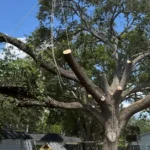
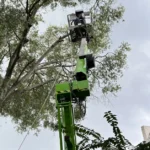
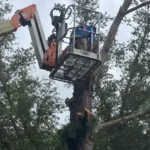
- Crane or bucket truck: For very large trees or ones near structures where we need precise control
- Stump grinder: If you want the stump gone too
- Additional trucks: For major hauling jobs
For example, that beautiful live oak hanging over your Tampa-area home might need a crane to safely remove the heavy limbs without damaging your roof. Yes, it costs more—but it’s worth it to avoid a $15,000 roof repair bill.
5. Time and Crew Size
Based on all the above factors, we estimate how many hours the job will take, how many crew members we’ll need, and whether it’s a one-day or multi-day project.
A small tree in an easy location? Maybe 2-3 crew members for a few hours. A complex removal near power lines with limited access? Could require a 4-5 person crew for an entire day.
6. Tree Condition
Dead, dying, or damaged trees can actually cost more to remove because they’re unpredictable and dangerous. Rotten wood breaks unexpectedly, and we need extra safety precautions.
Hurricane-damaged trees are especially tricky here in Florida—we never know what’s structurally compromised until we start cutting.
Red Flags: When a Quote Seems “Too Good to Be True”
If you get a quote that’s dramatically lower than others, pump the brakes. Ask these critical questions:
“Are You Fully Insured?”
This is NON-NEGOTIABLE. Tree removal is dangerous work. If someone without proper insurance damages your home or gets injured on your property, you could be held liable.
Always ask for proof of liability insurance and worker’s compensation coverage.
“What Are Your Qualifications?”
Anyone with a chainsaw can call themselves a tree service. Ask about ISA certifications, years of experience, and specialized training.
“Can I See References or Reviews?”
Before you hire anyone in Pasco or Hillsborough County, check Google reviews, BBB rating, and Facebook recommendations.
“What’s Your Actual Plan?”
A professional service will explain how they’ll protect your property, their rigging and lowering plan, cleanup process, and estimated timeline. If someone can’t or won’t explain their process, that’s a red flag.
The Real Cost of Going Cheap
We’ve been called to clean up after budget tree services more times than we’d like to count:
- Damaged roofs, siding, and windows
- Destroyed landscaping and lawns
- Broken fences
- Crushed air conditioning units
One Hillsborough County homeowner saved $400 going with a cheaper service… and then spent $3,500 repairing the fence and sprinkler system they damaged. The cheapest quote isn’t always the best value.
Ready for a Real Quote?
Stop wondering what your tree removal will cost. Call Grand Oaks at (813) 592-5977 or request a free estimate
. We’ll visit your property, assess your tree, discuss your needs, and provide a detailed written estimate with no surprises.