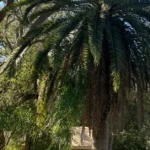
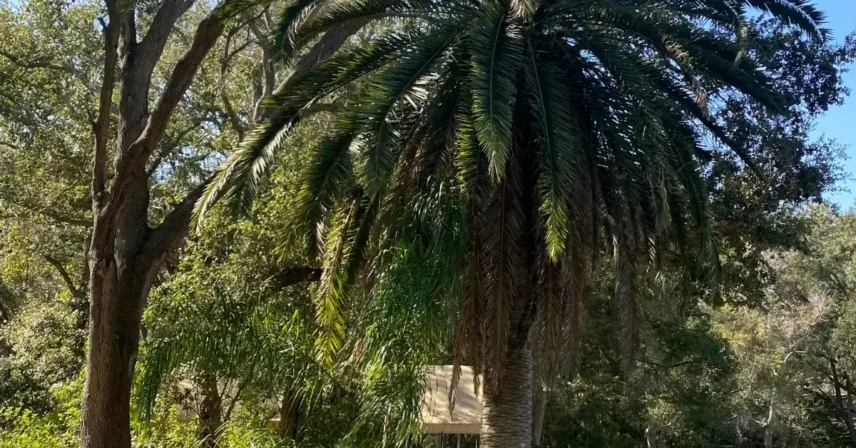
Palm trees are synonymous with Florida living. Throughout Wesley Chapel, Lutz, and the entire Tampa Bay area, palms define our tropical landscape. From the stately native cabbage palms (Sabal palmetto) to exotic date palms and sylvester palms, these distinctive trees require different care than traditional hardwood trees.
Unfortunately, palm tree pruning is one of the most misunderstood aspects of tree care. At Grand Oaks Tree Service, we regularly see palms damaged by improper trimming. Here’s what every Tampa Bay homeowner needs to know about properly maintaining palm trees.
Understanding Palm Biology
Palms aren’t technically trees at all. They’re more closely related to grasses and have fundamentally different structures than oaks, pines, or other hardwood trees common in Pasco and Hillsborough Counties.
Key Differences:
No Bark or Cambium Layer Palms don’t have protective bark. Their trunks are made of tough fibers surrounding a soft inner core. Wounds don’t heal the same way they do on hardwood trees.
Single Growing Point Unlike hardwood trees that can sprout new growth from many points, palms have one growing point (the bud or “heart”) at the top. If this is damaged, the entire palm dies.
No Secondary Growth Palms don’t increase in trunk diameter as they age. The trunk width is established when the palm is young and remains constant.
Nutrient Storage in Fronds Palm fronds (the “leaves”) store significant nutrients. Removing green fronds forces the palm to pull nutrients from the trunk, weakening the entire plant.
Common Palm Species in the Tampa Bay Area
Understanding your specific palm type helps determine proper care:
Native Palms
Cabbage Palm (Sabal palmetto) Florida’s state tree, native throughout Central Florida. These hardy palms are incredibly drought and salt-tolerant. They’re the most common palm in natural areas around Wesley Chapel and throughout Pasco County.
Saw Palmetto (Serenoa repens) Low-growing palm common in natural areas. Usually doesn’t require pruning unless encroaching on walkways or structures.
Popular Landscape Palms
Sylvester Palm (Phoenix sylvestris) Medium-sized date palm with silvery-blue fronds. Very popular in newer Wesley Chapel developments.
Pindo Palm (Butia capitata) Also called jelly palm, these have distinctive arching fronds and produce edible fruit. Common throughout Tampa Bay residential areas.
Queen Palm (Syagrus romanzoffiana) Tall, elegant palms with long, feathery fronds. Require more maintenance than native species and are susceptible to nutritional deficiencies in our soils.
Foxtail Palm (Wodyetia bifurcata) Distinctive bushy fronds. Increasingly popular in Hillsborough and Pasco County landscapes.
Pygmy Date Palm (Phoenix roebelenii) Small ornamental palm popular for entryways and containers. Requires minimal pruning.
The Biggest Palm Pruning Mistake: Hurricane Cuts
Walk through any Tampa Bay neighborhood and you’ll see palms with all but the newest few fronds removed, creating what’s called a “hurricane cut,” “pencil pointing,” or “rooster tail.” This is one of the most harmful practices in palm care.
Why Hurricane Cuts Hurt Palms:
- Removes Nutrient Reserves: Green fronds store nutrients the palm needs for new growth
- Stresses the Palm: Forces the plant to work harder to produce new fronds
- Doesn’t Prevent Storm Damage: Research shows over-pruned palms are actually MORE susceptible to storm damage
- Invites Pests: Creates entry points for palm weevils and other destructive insects
- Increases Disease Risk: Multiple fresh wounds are vulnerable to fungal infections
The University of Florida’s IFAS Extension explicitly recommends against hurricane cuts, yet the practice persists throughout Wesley Chapel and the Tampa Bay area.
Proper Palm Pruning Guidelines
The 9-3 Rule
Never remove fronds above the “9 o’clock and 3 o’clock” positions (horizontal to the ground). Only remove:
- Completely dead fronds (brown and crispy)
- Fronds hanging below horizontal
- Broken or damaged fronds
- Fruiting stalks (after fruiting)
This typically means removing only 1-3 fronds at each pruning session for healthy palms.
Frond Removal Technique
When removing fronds:
- Cut Close (But Not Too Close): Leave about 2 inches of frond base attached to the trunk. Never cut into the trunk itself.
- Sterilize Tools: Disinfect pruning tools between palms to prevent disease spread. Use a 10% bleach solution or 70% alcohol.
- Don’t Remove Green Tissue: If more than 25% of a frond is still green, leave it on the palm.
- Leave Boots: The frond bases (boots) left on the trunk are natural and provide some protection. They’ll eventually fall off on their own. However, in landscapes, many prefer to remove them for appearance.
When to Prune Palms in Tampa Bay
Unlike oaks, palms don’t have critical timing restrictions. However, best practices suggest:
Best Time: Late spring through summer (May-August)
- Palms are actively growing and can quickly produce replacement fronds
- Storm season preparation (though don’t over-prune)
Acceptable Time: Fall and winter
- Cooler weather slows growth, so recovery takes longer
- Still safe to remove dead fronds any time
Avoid When: During extended drought or cold snaps
- Already stressed palms shouldn’t be pruned
Palm Trimming Safety Considerations
Palm tree trimming is one of the most dangerous tree care activities:
Hazards Include:
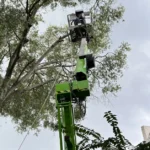
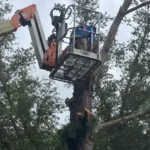
Height Many palms in Wesley Chapel and Tampa Bay reach 30-60+ feet tall, requiring specialized equipment.
No Climbing Spikes Unlike hardwood trees, palms shouldn’t be climbed with spikes, as this damages the trunk. Bucket trucks or specialized palm-climbing techniques are required.
Heavy Fronds Palm fronds, especially on date palms and cabbage palms, can weigh 30-50+ pounds. Falling fronds can cause serious injury.
Wildlife Rats, snakes, and insects often nest in palm fronds. Disturbing these while pruning creates unexpected hazards.
Falling Seeds/Fruit Date palms, queen palms, and other species produce heavy fruit clusters that can fall during pruning.
For these reasons, Grand Oaks Tree Service strongly recommends professional palm trimming for any palm over 10 feet tall.
Special Care for Specific Palm Types
Cabbage Palms (Sabal palmetto)
The most low-maintenance palms in our area. They:
- Rarely need pruning beyond removing dead fronds
- Self-clean naturally as older fronds die and fall
- Tolerate almost any soil and drought conditions
- Are highly hurricane-resistant when healthy
Many landscapes maintain the “boots” (old frond bases) on cabbage palms for their natural “shaggy” appearance.
Date Palms (Phoenix species)
Require more attention:
- Produce sharp thorns near the frond bases (wear heavy gloves)
- Heavy fruit production attracts rats and creates mess
- Frond removal should happen 2-3 times per year
- More susceptible to lethal bronzing disease (previously called lethal yellowing)
Queen Palms
High-maintenance compared to natives:
- Need regular fertilization with palm-specific fertilizer
- Susceptible to manganese and potassium deficiency (causing frond yellowing)
- Produce abundant seeds that create litter
- Weaker in hurricanes than native species
Foxtail Palms
Moderate maintenance:
- Self-cleaning, so less pruning needed
- More cold-sensitive than cabbage palms
- Require good drainage in our Tampa Bay clay soils
- Generally healthy with proper siting
Common Palm Problems in Tampa Bay
Nutritional Deficiencies
Our alkaline soils often lack nutrients palms need:
Manganese Deficiency: New fronds yellow with green veins Potassium Deficiency: Yellow/brown spots on older fronds, frond tips die back Magnesium Deficiency: Yellow bands on older fronds
Solution: Apply palm-specific fertilizer with micronutrients 3-4 times annually (March, June, September, and optionally December).
Lethal Bronzing Disease (formerly Lethal Yellowing)
Fatal disease affecting date palms, coconut palms, and some other species. Signs include:
- Premature fruit drop
- Rapid frond yellowing from bottom to top
- Complete death within 3-6 months
If suspected, contact a certified arborist immediately. While treatment options are limited, early antibiotic injections may help.
Ganoderma Butt Rot
Fatal fungal disease affecting many palm species:
- Mushroom-like conks appear at palm base
- Internal rot weakens trunk
- No cure exists; remove affected palms
Palm Weevils
Large beetles that bore into palm trunks:
- Over-pruned palms are more susceptible
- Can kill palms within months
- Prevention through proper care is essential
Maintaining Palm Health Beyond Pruning
Proper Fertilization
Use slow-release palm fertilizer with 2-1-1 N-P-K ratio plus micronutrients:
- Apply in early spring, early summer, and early fall
- Keep fertilizer 2+ feet from trunk
- Water thoroughly after application
Mulching
Apply 2-4 inches of mulch around palms:
- Keeps soil moist and temperature stable
- Provides organic matter as it decomposes
- Never pile mulch against the trunk (“volcano mulching” invites disease)
Irrigation
Most established palms in Wesley Chapel and Tampa Bay survive on rainfall except during severe droughts. Young palms need:
- Deep watering 2-3 times per week
- Reduced frequency as roots establish
- More water during extended dry periods
Protection from Damage
- Avoid weed trimmer damage to trunk base
- Don’t attach items to palms with nails or screws
- Protect from construction equipment
- Prevent soil compaction around root zones
When to Call a Professional
Contact certified arborists for:
- Any palm over 10 feet requiring pruning
- Palms near power lines or structures
- Signs of disease or pest infestation
- Palms leaning dangerously
- Storm damage assessment
- Questions about palm health
At Grand Oaks Tree Service, we serve the entire Tampa Bay region, including Wesley Chapel, New Tampa, Lutz, Land O’ Lakes, and surrounding Pasco and Hillsborough County areas. Our team understands the specific needs of palms in Central Florida’s unique climate and soil conditions.
Preserving Tampa Bay’s Tropical Character
Palms are essential to our Florida identity. The sight of cabbage palms swaying in a Gulf breeze is part of what makes Tampa Bay home. By understanding proper palm care and avoiding harmful practices like hurricane cuts, we can keep our landscapes healthy and beautiful.
Whether you have a single accent palm or dozens of palms throughout your property, proper care ensures they remain assets rather than liabilities. With minimal but correct maintenance, palms provide decades of low-maintenance beauty.