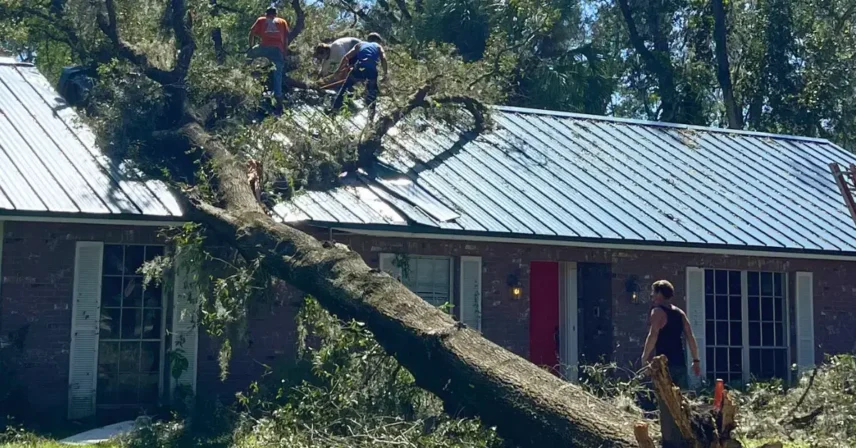
A tree just fell on your property. Maybe it came down in a storm. Maybe it was weakened by decay and finally gave out. Either way, it’s stressful, dangerous, and needs to be handled correctly.
Here’s your step-by-step guide for what to do right now — and what to avoid.
Step 1: Stay Safe
Stay Away from the Tree
A fallen tree is under unpredictable tension. Branches can spring violently when the weight shifts. Keep everyone — family, pets, bystanders — at a safe distance.
Check for Power Lines
If the tree hit or is near power lines, the situation is life-threatening. Assume all downed lines are live.
- Call 911 immediately
- Stay at least 35 feet away from any downed wire
- Don’t touch the tree or any wires
- If someone is trapped near downed lines, tell them to stay put
Evacuate If Needed
If the tree penetrated your roof or caused visible structural damage, move your family out of the affected area. The tree can continue to shift.
Step 2: Document Everything
Before anything gets moved, take photos and video. This is critical for your insurance claim.
- Photograph the tree, damage, and surrounding area from multiple angles
- Photograph the root ball if the tree was uprooted
- Note the date, time, and weather conditions
- Keep all receipts for emergency services and temporary repairs
Step 3: Contact Your Insurance
Most homeowner’s policies cover tree removal when the tree hits an insured structure — your house, garage, fence, or pool cage.
Trees that fall in open yard without hitting anything may not be covered. Your deductible applies, so know your amount before filing.
Step 4: Hire the Right Company
What to Look For
- Current liability insurance and workers’ comp
- 24/7 emergency availability
- Written estimates before work starts
- Established local reputation and reviews
Watch Out for Storm Chasers
After every big storm, unlicensed crews flood into Florida looking for easy money. They typically:
- Carry no insurance
- Have no arboricultural training
- Demand cash upfront
- Leave debris behind
- Overcharge because they know you’re desperate
Always verify licensing and insurance. No matter how urgent it feels.
What Professional Emergency Removal Looks Like
- Crew assesses the tree’s position, tension points, and hazards
- Work zone is cordoned off
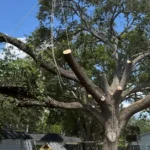
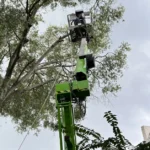
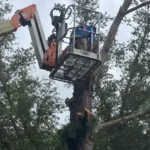
- Tree is dismantled in sections from the top down
- All debris is removed and the property is cleaned up
- Stump grinding if requested
After the Emergency
Once the immediate crisis is handled, get your remaining trees inspected. The same storm that brought down one tree may have damaged others.
A post-storm arborist inspection can catch problems before they become the next emergency. Call Grand Oaks at (813) 592-5977 — we offer 24/7 emergency response.