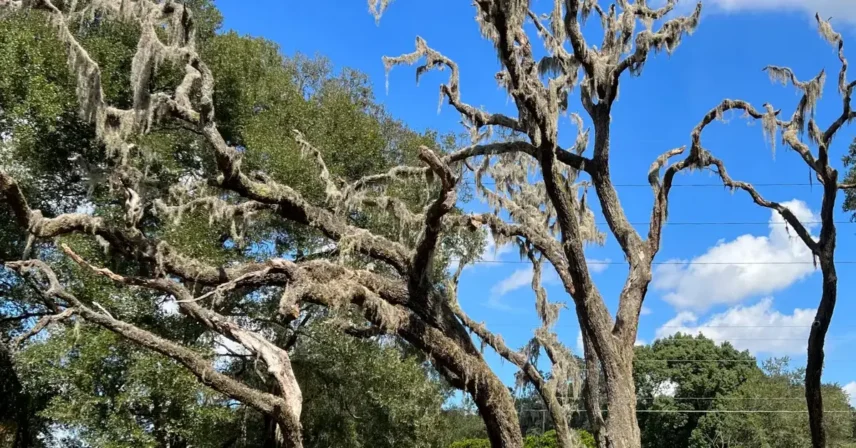
Oak trees are iconic in Pasco and Hillsborough County landscapes. From the majestic live oaks lining historic Tampa streets to the stately laurel oaks providing shade in Wesley Chapel neighborhoods, these trees add tremendous value to our properties. But Central Florida’s climate creates perfect conditions for several oak tree diseases that can weaken or kill even the healthiest-looking trees.
Understanding the diseases that threaten your oaks — and catching them early — can mean the difference between saving a 50-year-old tree and having to remove it.
Why Oak Trees Are Vulnerable in Central Florida
Central Florida’s warm, humid climate is paradise for us, but it’s also ideal for fungal pathogens and wood-boring insects. Our sandy soils, summer thunderstorms, and occasional drought stress create conditions where oak diseases can take hold quickly.
Add in the fact that many of our oak species (especially laurel oak and water oak) are relatively short-lived and prone to decay, and you have a recipe for tree health problems.
Hypoxylon Canker: The Silent Oak Killer
What it is: Hypoxylon canker is a fungal disease that attacks stressed oak trees. In Pasco and Hillsborough County, we see it most often after periods of drought, construction damage, or root injury.
What to look for:
- Bark sloughing off in large patches, especially on the trunk and main branches
- Tan, brown, or black crusty fungal mats exposed underneath the bark
- Branch dieback starting at the top of the tree (crown decline)
- Yellowing or browning leaves that don’t drop normally
- Rapid deterioration once symptoms appear
Why it happens: The hypoxylon fungus is present in most oak trees, but healthy trees can fight it off. When a tree becomes stressed from drought, soil compaction, root damage, or severe pruning, the fungus takes advantage and spreads rapidly through the sapwood.
Treatment options: Unfortunately, there’s no cure for hypoxylon canker. Once the crusty fungal mats appear, the tree is typically too far gone to save. The best strategy is prevention through proper watering, avoiding root damage, and maintaining overall tree health.
If your oak shows early signs of stress (yellowing leaves, thinning canopy), a certified arborist can sometimes improve tree vigor through deep root fertilization and proper watering protocols. But once the canker appears, removal is usually the safest option.
Oak Wilt: A Growing Threat in Florida
What it is: Oak wilt is a vascular disease caused by a fungus that blocks the tree’s water-conducting system. While it’s been devastating in Texas and the Midwest, it’s now confirmed in several Florida counties, and the threat is growing.
What to look for:
- Rapid browning of leaves starting at the leaf tips and edges
- Leaves dropping while still green or partially brown
- Dark streaking in the sapwood (visible if you peel back bark)
- Tree can die within weeks to months after symptoms appear
- Often starts on one side of the tree before spreading
How it spreads: Oak wilt spreads through root grafts between nearby oak trees and through sap-feeding beetles that carry fungal spores from infected trees to fresh wounds on healthy trees.
Treatment and prevention:
- Never prune oaks during active beetle season (February-June in Central Florida)
- If pruning is necessary, immediately seal all cuts with tree wound paint
- Avoid wounding oak trees with lawn equipment
- If oak wilt is confirmed in your neighborhood, consider trenching to sever root grafts between trees
- Remove infected trees promptly and properly (including stump and roots)
Armillaria Root Rot (Oak Root Fungus)
What it is: Armillaria is a root rot fungus that spreads through the soil and attacks oak trees through root-to-root contact.
What to look for:
- White fungal fans growing under the bark at the root collar
- Honey-colored mushrooms appearing at the tree base in fall (after heavy rain)
- Gradual decline with thinning canopy and undersized leaves
- Trees may suddenly topple in storms due to weakened roots
The danger: Armillaria-infected trees can appear stable but have severely compromised root systems. In Pasco County, we’ve seen apparently healthy oaks fail in tropical storms because armillaria had destroyed 60-70% of the root mass.
What you can do: Remove infected trees and stumps completely. The fungus can survive in dead roots for years, so stump grinding alone may not eliminate it. Avoid replanting susceptible trees (including other oaks) in the same location without soil treatment.
Bacterial Leaf Scorch
This bacterial disease affects live oaks and is spread by leaf-feeding insects. Symptoms include leaf browning along margins and between veins, starting in mid to late summer.
While not immediately fatal, bacterial leaf scorch weakens trees over several years, making them vulnerable to secondary infections and storm damage.
Management: No cure exists, but certified arborists can slow the disease through proper watering, fertilization, and reducing tree stress. Antibiotic injections show some promise but are expensive and must be repeated annually.
Oak Decline Syndrome in Laurel Oaks
Laurel oaks are popular throughout Pasco and Hillsborough County because they grow quickly and provide dense shade. But they’re also prone to a complex of problems collectively called “oak decline.”
Contributing factors:
- Natural lifespan of only 50-70 years (many landscape laurel oaks are past their prime)
- Weak wood that’s prone to decay
- Susceptibility to hypoxylon canker and other fungi
- Storm damage and cavities that allow decay organisms to enter
Signs of oak decline:
- Large dead branches throughout the canopy
- Cavities and hollow areas in the trunk
- Fungal conks (shelf fungi) growing from the trunk
- Reduced leaf size and sparse foliage
- Leaning or obvious structural defects
What to do: If your laurel oak is over 40 years old and showing multiple signs of decline, it’s time for a professional assessment. Many declining laurel oaks become safety hazards and should be removed before storm season.
Protecting Your Oak Trees in Central Florida
Proper watering: Even established oaks need supplemental water during dry spells. Water deeply (not frequently) to encourage deep root growth. A drip irrigation system or soaker hose around the root zone is ideal.
Avoid soil compaction: Never drive or park vehicles over oak tree root zones. Compacted soil suffocates roots and creates stress that invites disease.
Protect during construction: If you’re building or renovating, install tree protection fencing at the drip line (edge of the canopy) before any equipment arrives. Root damage during construction is a leading cause of oak decline.
Proper mulching: Apply 2-4 inches of mulch around your oak trees, but keep it 6-8 inches away from the trunk. “Volcano mulching” (piling mulch against the trunk) traps moisture and promotes fungal growth.
Annual inspections: Have a certified arborist inspect your valuable oak trees annually. Early detection of decay, disease, or structural problems can often mean the difference between treatment and removal.
When to Call Grand Oaks
If you notice any of these warning signs in your Pasco or Hillsborough County oak trees:
- Unusual leaf discoloration or early leaf drop
- Bark sloughing off or fungal growth on the trunk
- Large dead branches
- Mushrooms growing at the tree base
- Sudden wilting or rapid decline
Contact Grand Oaks Tree Service for a professional tree health assessment. Our certified arborists serve Wesley Chapel, Land O’Lakes, Lutz, Tampa, and throughout the Tampa Bay area.
Early intervention can often save a diseased oak — but waiting too long means the tree becomes a liability that must be removed.
Protect your investment. Know the signs. Save your oaks.