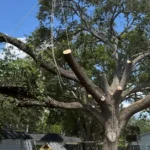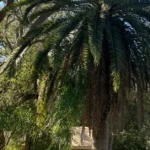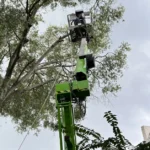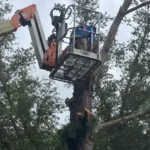
There’s something uniquely Florida about the trees in your yard. Maybe it’s the majestic live oak with branches sprawling across your property, or the tall sabal palms swaying near your pool. These trees define our Tampa Bay landscape—but they also present specific dangers when it comes to DIY trimming.
Every year, we see homeowners in Wesley Chapel and throughout Pasco and Hillsborough counties attempt tree trimming that seems straightforward but turns dangerous. Some get lucky. Others end up in the emergency room, with property damage, or facing expensive repairs to trees they accidentally harmed.
Let’s talk honestly about why trimming Florida trees yourself is riskier than you might think, and what makes our local species particularly hazardous.
Why Florida Trees Are Different (And More Dangerous)
Our Unique Tree Species Present Unique Challenges
Palms Aren’t Really Trees Botanically speaking, palms are more closely related to grasses than trees. This means:
- They have a completely different structure than hardwoods
- One major mistake can kill the entire plant (they can’t regenerate from branches)
- Dead fronds are heavier and more dangerous than they appear
- Climbing palms requires specialized techniques different from hardwood trees
Live Oaks Have Massive Horizontal Branches Tampa Bay’s iconic live oaks grow differently than trees in most of the country:
- Enormous limbs extend horizontally, often 30-50+ feet
- Branches are deceptively heavy (one large limb can weigh several tons)
- The spread makes it difficult to judge where branches will fall
- Dense canopies hide hazards like wasp nests and widow makers
Our Climate Creates Hidden Hazards Florida’s humid, rainy environment means:
- Internal decay progresses quickly and is often invisible
- Fungal issues compromise branch strength
- Insects (fire ants, wasps, bees) nest in trees year-round
- Wet bark becomes slippery, increasing fall risk
- Rot develops at branch unions, creating weak points
The Height Problem
Many Florida trees grow exceptionally tall:
- Slash pines: 60-100 feet
- Sabal palms: 40-80 feet
- Live oaks: 40-80 feet tall with even wider spreads
- Laurel oaks: 40-60 feet
Any work requiring a ladder or climbing is exponentially more dangerous. Falls from heights above 10 feet frequently result in serious injury or death.
The Specific Dangers of DIY Palm Trimming
Palms seem deceivingly simple—just cut off the dead fronds, right? Wrong. Palm trimming is one of the most dangerous tree-related tasks.
Why Palm Trimming Is Hazardous
The “Skirting” Danger Dead palm fronds create a thick skirt around the trunk. This seemingly dead material:
- Weighs hundreds of pounds in total
- Falls unpredictably when cut
- Can trap you against the trunk if you’re climbing
- Often harbors stinging insects, spiders, and rats
Single Point of Growth Unlike hardwood trees, palms have only one growing point—the terminal bud at the top. If you damage this:
- The entire palm dies (there’s no recovery)
- Improper cutting angle can allow water into the crown, causing rot
- Over-trimming weakens the palm’s ability to photosynthesize
Height and Climbing Risks To properly trim a palm, you typically need to:
- Climb 20-60+ feet
- Use specialized equipment (spikes, saddle, ropes)
- Cut while suspended on the trunk
- Manage heavy, awkward fronds while maintaining three-point contact
Real Tampa Bay Incident: A Wesley Chapel homeowner attempted to trim a 40-foot sabal palm from a ladder. When he cut a large frond, it swung back, knocking him off the ladder. He fell 15 feet, breaking his leg and wrist. The total cost—between medical bills, lost work, and eventually hiring a professional to complete the job—exceeded $25,000.
Species-Specific Palm Hazards
Sabal Palm (Florida’s State Tree)
- Fronds have sharp, spiny stems
- Dead fronds interlock, creating unstable platforms
- Trunk diameter makes it difficult to reach around while climbing
Washingtonia (California Fan Palm)
- Extremely tall (up to 80 feet)
- Dead fronds create massive, dangerous skirts
- Fire hazard when dry fronds accumulate
Queen Palm
- Fronds have sharp, needle-like spines
- Heavy fronds fall unpredictably
- Prone to lethal bronzing disease (trimming can spread it)
Date Palms
- Long, stiff spines on fronds can cause puncture wounds
- Extremely heavy fronds
- Dates attract bees and wasps
The “Over-Pruning” Problem
Many DIY enthusiasts make a critical mistake: removing too many fronds. This practice, called “hurricane cuts” or “penciling”:
- Severely weakens the palm
- Makes it MORE susceptible to wind damage
- Reduces the palm’s ability to produce food
- Invites disease and pest problems
- May actually violate local landscape ordinances
Proper palm pruning removes only completely dead fronds and those hanging below horizontal—nothing green.
The Hidden Dangers of Live Oak Trimming
Live oaks are Tampa Bay treasures, but they’re also complex, massive trees that require expert knowledge to prune safely.
What Makes Live Oaks Dangerous to Trim
Size and Weight
- Mature live oak limbs can weigh 2,000-5,000+ pounds
- Branches often extend 40-50 feet horizontally
- The wood is extremely dense and heavy
- Removing even one branch requires understanding forces, balance, and proper cutting techniques
Branch Unions and Hidden Defects Live oaks commonly develop:
- Included bark at branch unions (weak attachment points)
- Internal decay that’s invisible from the ground
- Codominant stems that can split
- Epicormic growth (water sprouts) that blocks visibility
Disease Transmission Risk Improper pruning of live oaks can:
- Spread oak wilt if done during high-risk periods (February-June)
- Create entry points for fungal pathogens
- Attract sap-feeding beetles that carry disease
- Weaken the tree’s natural defenses
Complex Pruning Requirements Proper live oak pruning requires:
- Understanding of branch collar location for proper cuts
- Three-cut method for large branches
- Knowledge of proper pruning timing
- Understanding of the tree’s growth patterns and response to cuts
- Ability to maintain the tree’s natural shape
Common DIY Live Oak Mistakes
Topping Cutting across the top of the tree to reduce height:
- Ruins the tree’s natural form permanently
- Creates multiple weak sprouts at cut sites
- Dramatically shortens the tree’s lifespan
- Decreases property value
- Violates ISA standards and many local ordinances
Lion’s Tailing Removing all interior branches and leaving only foliage at branch ends:
- Increases wind resistance and branch failure risk
- Removes the tree’s ability to close interior wounds
- Stresses the tree by removing too much foliage
- Creates ugly, unnatural appearance
Flush Cutting Cutting branches flush with the trunk:
- Removes the branch collar needed for proper healing
- Creates large wounds that won’t close properly
- Invites decay into the main trunk
- Can kill the tree over time
Over-Pruning Removing more than 25% of the canopy in one session:
- Severely stresses the tree
- Reduces photosynthetic capacity
- Makes the tree vulnerable to pests and disease
- Can trigger aggressive water sprout growth
Equipment Hazards: Why Rental Tools Are Deceptively Dangerous
“I’ll just rent a chainsaw and lift” sounds reasonable—until you understand the risks.
Chainsaw Dangers
Kickback The #1 cause of chainsaw injuries:
- Occurs when the tip of the bar contacts something unexpectedly
- Can throw the saw back at your face/chest at high speed
- Happens in a fraction of a second
- Often results in severe, life-changing injuries
Loss of Control
- Working overhead makes control difficult
- Fatigue reduces reaction time and judgment
- Binding in cuts can cause sudden movements
- Working on a ladder multiplies control difficulties
Statistics:
- 36,000+ chainsaw injuries require ER visits annually in the US
- Most injuries occur to occasional users, not professionals
- Upper body and leg injuries are most common
- Many injuries result in permanent disability
Aerial Lift Hazards
Bucket trucks and aerial lifts seem like the safe solution—but they introduce their own risks:
Tipping and Instability
- Must be on firm, level ground (hard to achieve in yards)
- Load calculations must account for branch weight
- Side forces from pulling/cutting can tip the lift
- Soft soil or hidden underground utilities create hazards
Electrocution
- Power lines are often hidden in tree canopies
- Electrical arcs can jump several feet through tree limbs
- Lift booms conduct electricity
- No second chances with electricity
Falling from the Bucket
- Must wear proper fall protection (harness, lanyard)
- Unexpected branch movement can throw you from the bucket
- Most rental lifts don’t include proper fall arrest systems
- Leaning out to reach branches is extremely dangerous
Operation Complexity
- Controls vary between models
- Requires training and certification in many jurisdictions
- Easy to damage the lift, your property, or overhead lines
- Most homeowner’s insurance doesn’t cover lift accidents
Real Cost Example: Renting an aerial lift for a weekend costs $400-$800. Damage one underground sprinkler line or cable, and you’re out another $500-$2,000. Hit a power line, and you’re looking at utility emergency calls, repairs, and potential injury—easily $10,000+.
Environmental Hazards Unique to Florida
Wildlife Dangers
Stinging Insects Florida trees commonly harbor:
- Fire ants (extremely aggressive when disturbed)
- Wasps and hornets (nests hidden in foliage)
- Africanized honey bees (more common in South Florida but moving north)
- Multiple stings can cause severe reactions or anaphylaxis
Snakes Tree-climbing snakes are common in Florida:
- Rat snakes frequently climb
- Occasionally venomous species like pygmy rattlesnakes near ground level
- More active during warm months (which is most of the year here)
Other Hazards
- Spiders (including black widows in dead fronds)
- Biting flies and mosquitoes
- Rats and squirrels (which may bite if cornered)
Weather Challenges
Heat and Humidity Tampa Bay summers create serious risks:
- Heat exhaustion and heat stroke
- Dehydration affects judgment and coordination
- Wet clothing and equipment from sweat
- Physical exertion in 90°+ temperatures with 80%+ humidity
Sudden Storms Florida’s afternoon thunderstorms:
- Develop quickly with little warning
- Lightning is deadly (don’t be in or under trees during storms)
- Wet bark becomes slippery within minutes
- Wind gusts can move branches unexpectedly
Hurricane Season Pressure Before storm season, homeowners rush to trim trees:
- Last-minute work leads to rushed, unsafe decisions
- Higher demand means rental equipment may be in poor condition
- Pressure to “get it done” overrides safety concerns
Legal and Insurance Implications
What Your Homeowner’s Insurance Won’t Cover
Most homeowner’s policies exclude or limit:
- Injuries sustained while performing tree work
- Damage to your property from your own tree work
- Liability for damage to others’ property if caused by your negligence
- Medical bills for treating chainsaw injuries if deemed avoidable
Read Your Policy: Many policies specifically exclude coverage for:
- Injuries from “inherently dangerous activities”
- Tree removal and major pruning activities
- Use of commercial equipment (lifts, large saws)
Local Ordinance Violations
Improper Pruning Can Result in Fines:
- Some municipalities prohibit topping or harmful pruning practices
- Protected trees (like large live oaks) may require permits even for trimming
- HOAs often have strict rules about tree pruning
- Violations can result in $500-$5,000+ in fines
Pasco and Hillsborough County Specifics:
- Tree protection ordinances vary by municipality
- Some areas require permits for major pruning of protected species
- “Self-help” trimming of trees on property lines has specific regulations
- Damage to heritage trees can result in significant penalties
Neighbor Relations
Improper trimming creates legal exposure:
- Branches falling on neighbor’s property
- Damage to shared fence lines
- Reduced property values from tree damage
- Noise complaints during early morning/late evening work
When “Just Trimming One Branch” Goes Wrong
Let’s walk through a common scenario:
The Setup: You have a dead oak branch hanging over your driveway. It’s just one branch—maybe 20 feet up, about 8 inches in diameter. You rent a ladder and a chainsaw.
What Can Go Wrong:
- Misjudging Branch Weight
- 8-inch diameter oak branch, 10 feet long = 200-300+ pounds
- As you cut through, the branch sags, binding the saw
- When it breaks free, it swings back toward you
- Ladder Instability
- Operating a chainsaw requires two hands
- You can’t hold the ladder while cutting
- The saw’s vibration loosens your footing
- A slight shift, and you’re falling 20 feet
- Kickback
- The saw tip catches bark as the branch moves
- Kickback throws the running chainsaw toward your face
- You instinctively let go, losing balance
- Unexpected Branch Behavior
- The branch is caught in other branches you didn’t see
- When cut, it swings sideways instead of falling
- It hits your ladder, knocking you off
- Or it crashes through your car windshield parked below
The Result: Best case: property damage, a scary story, and calling a professional to finish. Worst case: serious injury, ER visit, months of recovery, and permanent disability.
The Cost:
- ER visit for broken bones: $5,000-$20,000
- Lost work: weeks to months of income
- Property damage: $1,000-$10,000+
- Professional to complete job: $500-$1,500
- Emotional trauma: priceless
Compare this to hiring a professional from the start: $300-$800 to safely remove the branch, with zero risk to you.
How Professionals Stay Safe (And Why You Can’t Replicate It)
Specialized Equipment
Professional Gear You Won’t Rent:
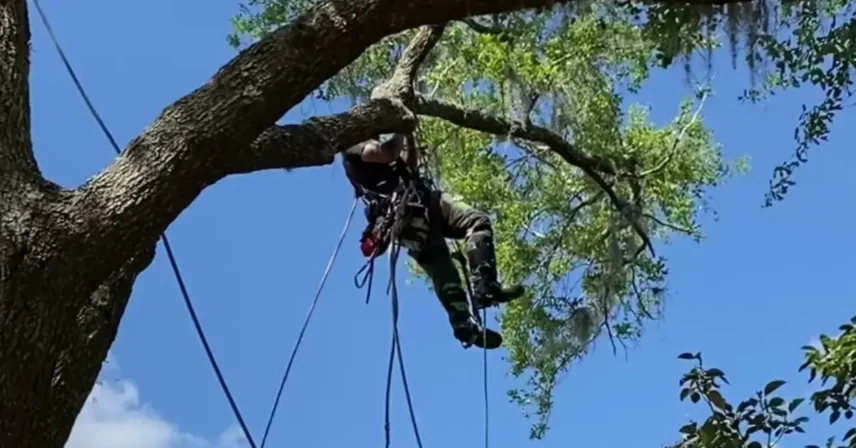
- Proper arborist saddles and positioning lanyards
- Steel-core climbing ropes rated for tree work
- Friction-saving devices and pulleys
- Rigging systems for controlled limb lowering
- Cut-resistant chainsaw pants and boots
- Fall arrest systems and shock absorbers
Tools Beyond Basic Chainsaws:
- Pole saws for reach without climbing
- Climbing saws designed for one-handed use
- Rigging straps and hardware
- Specialized pruning equipment for proper cuts
Training and Experience
What Professionals Know:
- Tree anatomy and proper cut locations
- Weight and balance calculations
- Recognition of hazards (decay, weak unions, tension/compression)
- Proper climbing techniques and safety systems
- Emergency procedures and rescue techniques
- Species-specific pruning requirements
Ongoing Education:
- ISA Certified Arborists: 30 continuing education units every 3 years
- OSHA safety training
- Equipment operation certification
- First aid and CPR training
- Regular safety meeting and updates on techniques
Insurance and Backup
When Things Go Wrong:
- Professional crews have workers’ comp coverage
- Multiple team members provide backup and assistance
- Supervisors monitor work and safety
- Emergency response plans are in place
- Insurance covers property damage
You Don’t Have:
- Coverage if you’re injured
- Someone to help if you’re in trouble
- Professional assessment of risks before starting
- Recourse if you damage property