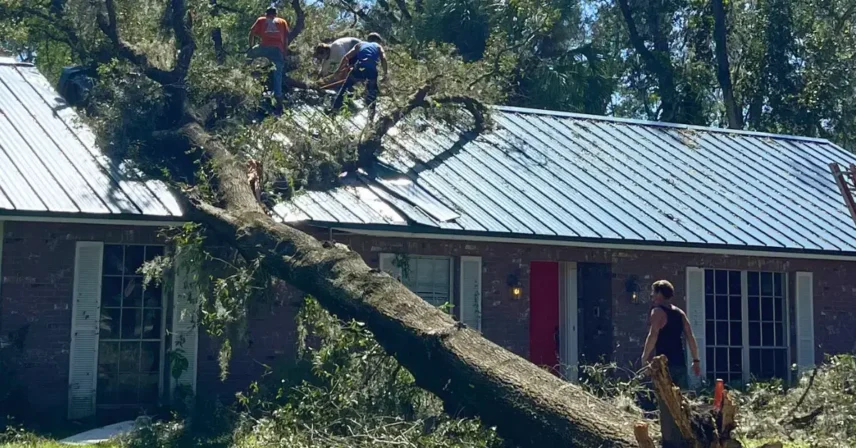
When Hurricane Ian was bearing down on Tampa Bay in September 2022, phone lines at tree services across Pasco and Hillsborough County lit up with panicked calls. When the storm shifted south and spared us the worst, those same tree services were overwhelmed with requests from Fort Myers and Naples.
If—when—a major hurricane hits our area, understanding how emergency tree services work in each county could mean the difference between quick recovery and weeks of dangerous waiting.
How County Emergency Management Coordinates Tree Services
Both Pasco and Hillsborough County have emergency management protocols for post-hurricane tree removal, but they operate differently.
Pasco County Emergency Response
Pasco County Emergency Management Division coordinates with:
- Public Works (for roadway clearing)
- Utilities (for trees on power lines)
- Private tree services (for residential properties)
Priority system after a major storm:
- Life-safety emergencies (trees on occupied structures, blocking emergency access)
- Critical infrastructure (trees on power lines, water facilities, hospitals)
- Major roadway clearing (main arteries, evacuation routes)
- Residential properties (private tree services handle these)
What this means for homeowners in Wesley Chapel, New Port Richey, and other Pasco communities: If a tree falls on your occupied home, you’ll get faster response than if it falls in your backyard. Trees blocking public roads get cleared by the county; trees on private property are your responsibility.
Pasco County resources:
- Emergency information: 727-847-8137
- Road closures and debris hotline activated after storms
- Online GIS mapping shows cleared vs. blocked roads
Hillsborough County Emergency Response
Hillsborough County Emergency Management operates similarly but with more resources due to the larger population and tax base.
Priority system:
- Life-safety emergencies
- Hospital and emergency service access
- Major transportation corridors
- Residential neighborhoods (street access, not individual properties)
What this means for Hillsborough County homeowners: The county will clear main roads and subdivision entrances, but trees on your property—even if blocking your driveway—are your responsibility. Exception: trees on county right-of-way.
Hillsborough resources:
- Storm info: 813-272-5900
- More robust mutual aid agreements (can bring in resources faster)
- Larger approved contractor list for emergency work
The Harsh Reality: Private Property = Private Responsibility
Here’s what catches many homeowners off-guard after a hurricane:
County emergency services will NOT:
- Remove trees from private property
- Remove trees blocking your personal driveway
- Remove trees that fell on your home (unless it creates a public safety emergency)
- Remove trees in your yard that didn’t hit structures
You are responsible for:
- Hiring and paying for tree removal on your property
- Coordinating with your insurance company
- Finding available tree services (which will be overwhelmed)
- Protecting your property from additional damage after initial tree fall
This is why having a relationship with a local tree service BEFORE hurricane season matters so much.
County Permit Requirements After a Storm
Pasco County Post-Hurricane Permits:
Permits typically waived for:
- Emergency removal of trees that fell on structures
- Hazardous trees creating immediate danger
- Dead or storm-damaged trees
Permits still required for:
- Protected species that are still standing (even if damaged)
- Large trees not directly impacted by the storm
- Trees in environmental preservation areas
Processing time after a storm: Expect delays. Pasco County’s development services may operate with reduced staff, and permit processing can take weeks instead of the normal 5-10 days.
Hillsborough County Post-Hurricane Permits:
Emergency declarations often include:
- Temporary suspension of tree removal permits for storm-damaged trees
- Expedited permits for hazard removal
- Relaxed requirements for debris placement
What stays the same:
- Protected tree ordinances (still can’t remove healthy grand oaks without review)
- Environmental buffer requirements
- Wetland protections
Pro tip: Document storm damage with photos BEFORE removing trees. If permitting questions arise later, you’ll have proof the tree was storm-damaged.
How to Get Emergency Tree Service: Step-by-Step
Before the Storm (Do This NOW):
- Identify a local, licensed tree service
- Verify they’re licensed in Pasco/Hillsborough County
- Confirm they have proper insurance
- Get their emergency contact number
- Ask about post-storm priority lists (some services maintain lists of pre-storm clients)
- Document your trees
- Photo inventory of all trees near structures
- Note any trees you’re concerned about
- Share with your tree service during pre-storm assessment
- Review your homeowner’s insurance
- Know your tree removal coverage limits (often $500-$1,000)
- Understand what triggers coverage (tree must hit a structure)
- Have your agent’s contact info readily available
After the Storm Hits:
Immediate steps (within hours):
- Assess safety
- Stay away from downed power lines (assume ALL lines are live)
- Don’t approach trees leaning on structures—they can shift
- Evacuate if trees compromised your home’s structural integrity
- Document everything
- Photos and video from multiple angles
- Date and time stamps if possible
- Don’t remove anything until documented
- Contact emergency services if needed
- 911 for life-threatening situations
- County emergency management for road clearing
- Power company for trees on lines (never touch these yourself)
- Contact your insurance company
- File your claim immediately
- Ask about emergency mitigation coverage (temporary tarping, etc.)
- Get adjuster assignment info
- Contact tree services
- Call your pre-identified local service first
- If they’re overwhelmed, try others on your list
- Be prepared for wait times of days or weeks after a major storm
The Priority System: How Tree Services Triage After Hurricanes
When a major storm hits, legitimate tree services use a priority system:
Tier 1: Immediate Danger (same day or next day)
- Trees on occupied structures
- Trees blocking only access/egress to property
- Trees on vehicles with people potentially trapped
- Trees creating imminent collapse risk
Tier 2: Serious Hazards (2-5 days)
- Trees on unoccupied structures
- Trees blocking driveways (but other access exists)
- Large hanging branches over structures
- Trees on power lines (in coordination with utility)
Tier 3: Property Damage, No Safety Risk (1-3 weeks)
- Trees that fell but didn’t hit structures
- Trees in yards away from buildings
- Cosmetic damage to landscaping
- Cleanup and debris removal
Where you fall in this priority system depends on your specific situation—not when you call.
Red Flags: Avoiding Storm-Chasing Scammers
After every major storm, unlicensed “contractors” flood the area looking for quick money. They cause more problems than they solve.
Warning Signs of Storm-Chasing Scams:
🚩 They go door-to-door soliciting business Legitimate tree services are too busy to knock on doors—customers call them.
🚩 They demand payment upfront Real companies bill after work is complete or require small deposits only.
🚩 They can’t provide insurance certificates If they won’t give you proof of liability and workers’ comp insurance, walk away.
🚩 They’re from out of state with no local presence Post-storm, many scammers drive in from other states. No local address = no accountability.
🚩 They pressure you to decide immediately “We’re leaving this afternoon” is a classic pressure tactic.
🚩 They offer to “handle your insurance claim” This is often a sign of fraud. You handle your insurance; they handle tree removal.
🚩 Prices seem too good to be true After a storm, prices go UP due to demand. Suspiciously low bids often mean they’ll do shoddy work or disappear.
How to Verify a Tree Service in Pasco or Hillsborough County:
Check licensing:
- Pasco County: Occupational licenses verified through Development Services
- Hillsborough County: Contractor licensing through County’s online portal
Verify insurance:
- Ask for certificate of liability insurance
- Call the insurance company to confirm it’s active
- Verify workers’ compensation coverage
Check local presence:
- Google Business Profile with reviews
- Physical address (not just a P.O. Box)
- Local phone number
- Established reputation in the community
County-Specific Resources for Homeowners
Pasco County:
Emergency Management: 727-847-8137
Development Services (permits): 727-847-8140
Road & Bridge (public road clearing): 727-834-3600
Solid Waste (debris removal): 727-856-4539
After a storm, Pasco County activates:
- Debris monitoring hotline
- GIS mapping of cleared roads
- Special debris pickup (separate from regular trash)
- Temporary storm debris sites
Hillsborough County:
Emergency Management: 813-272-5900
County Development Services: 813-272-5600
Roads & Drainage (street clearing): 813-274-8050
Solid Waste (debris): 813-272-5680
After a storm, Hillsborough County provides:
- Emergency information hotline
- Online debris pickup schedule
- Multiple debris drop-off sites
- Contractor verification system
Why Grand Oaks Serves Both Counties
Grand Oaks Tree Service operates in both Pasco and Hillsborough County because we understand the unique challenges of each jurisdiction.
We’re licensed, insured, and established locally—which means:
- We’re here before, during, and after storms
- We know county-specific permitting requirements
- We maintain relationships with local emergency management
- We prioritize our pre-storm assessment clients after hurricanes
- You can verify our credentials with county records
Our post-storm priority commitment: Clients who schedule pre-storm assessments with us get priority placement after hurricanes hit. We’ll already know your property, your vulnerable trees, and your concerns—allowing us to respond faster when it matters most.
The Bottom Line: Prepare Before You Need It
Emergency tree service after a hurricane isn’t about finding “a guy with a chainsaw”—it’s about having a relationship with a qualified, licensed, insured tree service that knows your property.
The time to establish that relationship is now, not when you’re standing in your yard looking at a tree on your roof.
Grand Oaks serves Wesley Chapel, New Port Richey, Tampa, and throughout Pasco and Hillsborough County. Let us assess your property before hurricane season, so we can protect it when the storm comes.
Schedule your pre-storm assessment or contact us to discuss emergency tree service planning.