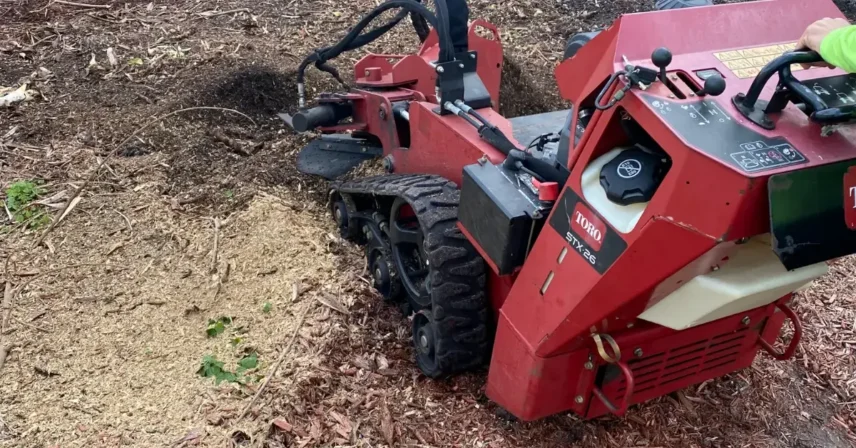
If you picture land clearing as bulldozers pushing trees into piles for burning, you’re imagining how it was done 20 years ago. Today, there’s a better way—one that’s faster, more economical, and far better for the environment.
Welcome to the world of forestry mulching, a land clearing method that’s transforming how property owners in Tampa Bay prepare their lots for construction, pasture development, fire mitigation, and trail creation.
Whether you’re clearing a residential building lot in Wesley Chapel, opening up overgrown pasture land in Pasco County, or creating defensible space around your rural Hillsborough County property, forestry mulching might be the perfect solution.
Let’s explore what it is, how it works, and why it’s becoming the go-to method for land clearing throughout the Tampa Bay region.
What is Forestry Mulching?
Forestry mulching uses a specialized machine—a forestry mulcher—to grind trees, brush, stumps, and vegetation into fine mulch in a single pass. Unlike traditional clearing methods that require multiple pieces of equipment and multiple steps, forestry mulching is a one-machine, one-step process.
How the Equipment Works
A forestry mulcher is essentially a powerful rotating drum studded with hardened steel teeth. The drum spins at high speed (500-1000+ RPM depending on the machine) and literally chews through vegetation.
Modern forestry mulchers can handle:
- Trees up to 8-10 inches in diameter (some larger machines handle 12-14 inches)
- Dense palmetto and scrub brush
- Small stumps and root systems
- Thick vines and underbrush
- Mixed vegetation in a single pass
The result? All that vegetation is transformed into a uniform layer of shredded mulch that’s spread across your property.
Traditional Clearing vs. Forestry Mulching: A Side-by-Side Comparison
Let’s break down how these two methods stack up:
Traditional Land Clearing Method:
Equipment needed:
- Bulldozer or excavator
- Chainsaw crew
- Dump trucks (multiple loads)
- Stump grinder
- Loader for debris handling
Process:
- Cut trees with chainsaws
- Push trees into piles with bulldozer
- Load debris into dump trucks
- Haul material to disposal facility (multiple trips)
- Grind stumps separately
- Rake and grade the lot
- Remove remaining debris
Timeline: 3-7 days for a typical 1-acre lot
Result: Completely bare dirt, exposed topsoil vulnerable to erosion
Forestry Mulching Method:
Equipment needed:
- One forestry mulcher
- That’s it.
Process:
- Drive the mulcher across the property
- Grind everything in place
- Fine-tune the mulch distribution
Timeline: 1-2 days for a typical 1-acre lot
Result: Property cleared with a protective layer of organic mulch left in place
The Benefits of Forestry Mulching for Tampa Bay Properties
1. Speed and Efficiency
Because forestry mulching is a single-step process with one machine, it’s dramatically faster than traditional methods.
Real-world example: A 2-acre wooded lot in Wesley Chapel that would take 5-7 days to clear traditionally can be forestry mulched in 2-3 days.
For property owners with construction timelines or seasonal considerations (Florida’s rainy season), this speed advantage is significant.
2. Cost Savings
Forestry mulching is typically 30-50% less expensive than traditional land clearing. Here’s why:
No hauling costs: Traditional clearing requires multiple dump truck loads to haul debris to disposal facilities. At $150-$300 per load, this adds up quickly. With forestry mulching, nothing leaves the site.
Less labor: One skilled operator with one machine replaces a crew of 3-5 workers with multiple equipment pieces.
Fewer steps: Each step in traditional clearing (cutting, piling, hauling, stump grinding, cleanup) adds labor and time costs.
For a typical 1-acre residential lot in Pasco or Hillsborough County:
- Traditional clearing: $6,000-$10,000
- Forestry mulching: $3,500-$6,000
3. Erosion Control (Critical in Florida)
Here’s something property owners often don’t consider until it’s too late: Florida’s intense summer thunderstorms can wash away bare topsoil in a single afternoon.
Traditional land clearing leaves your lot completely bare—exposed to:
- Heavy rainfall (Tampa averages 46+ inches per year)
- Wind erosion
- Stormwater runoff
The 2-4 inch mulch layer left by forestry mulching acts as a natural erosion barrier by:
- Absorbing rainfall impact
- Slowing water flow across the property
- Holding topsoil in place
- Preventing gully formation
This is especially important in Tampa Bay’s wet season (June through September) when afternoon storms dump 2-3 inches of rain in hours.
4. Soil Health Improvement
Over time, the mulch layer decomposes and adds organic matter to the soil—a huge benefit in Florida’s typically nutrient-poor sandy soils.
Benefits include:
- Improved water retention (sandy soil drains too quickly)
- Added nutrients as organic matter breaks down
- Better soil structure for future landscaping
- Beneficial microorganism habitat
5. Environmental Benefits
Forestry mulching is the most environmentally friendly land clearing method:
No burning: Traditional clearing often ends with burning debris piles, releasing carbon and particulates. Forestry mulching eliminates this entirely.
Minimal soil disturbance: The mulcher works at surface level without digging or scraping topsoil like bulldozers do.
Wildlife-friendly: The mulch layer provides habitat for beneficial insects, and the gradual decomposition process doesn’t create the stark habitat destruction of traditional clearing.
Carbon sequestration: As mulch decomposes, some carbon is sequestered in the soil rather than released into the atmosphere.
6. Aesthetic Appeal
Forestry mulched properties have a clean, park-like appearance with a uniform brown mulch layer. It looks intentional and maintained—not like a construction zone.
This matters if:
- You’re clearing only part of your property
- You want the lot to look good during construction
- You’re creating trails or recreational paths
- Neighbors will see the cleared area
When Forestry Mulching is the Perfect Choice
Forestry mulching excels in these Tampa Bay scenarios:
Residential Lot Clearing
Preparing building lots in Wesley Chapel, Land O’ Lakes, or Brandon? Forestry mulching offers the speed and cost savings that make sense for homebuilders.
Pasture Reclamation
Rural Pasco and Hillsborough County property owners use forestry mulching to reclaim overgrown pastures without the expense of traditional clearing.
Trail Creation
Creating nature trails, equestrian paths, or hiking trails? Forestry mulching creates a natural mulched path surface.
Fire Mitigation
Florida wildfires are a real threat. Forestry mulching creates defensible space around rural properties by removing understory brush and ladder fuels while preserving desirable trees.
Invasive Species Control
Tampa Bay properties often have invasive species like:
- Brazilian pepper
- Australian pine
- Wild cherry laurel
- Air potato vines
Forestry mulching grinds these invaders completely, preventing regrowth better than cutting alone.
Selective Clearing
Want to keep mature oaks but remove everything else? Forestry mulchers can work around designated trees, selectively clearing understory while preserving specimen trees.
When Traditional Clearing Might Be Better
Forestry mulching isn’t always the answer. Consider traditional methods when:
Very Large Trees
Trees over 10-12 inches in diameter can bog down mulchers or require multiple passes. For lots with numerous large hardwoods, traditional felling and removal may be more efficient.
“Clean Slate” Requirements
Some builders or property owners want absolutely bare ground with zero organic material. If that’s your requirement, traditional clearing with complete debris removal is necessary.
Grading-Intensive Projects
Major grading work (cutting and filling for foundations, driveways, etc.) requires excavation equipment anyway. In these cases, combining traditional clearing with grading may be more efficient.
Wetland or Sensitive Areas
Some environmentally sensitive sites require hand-cutting and complete debris removal to minimize disturbance. Forestry mulchers, while low-impact, still exert ground pressure that may not be appropriate in fragile wetlands.
What to Expect: The Forestry Mulching Process
Here’s how a typical forestry mulching project unfolds:
Step 1: Site Assessment (Day 1)
We’ll walk your property to:
- Identify trees you want to preserve
- Note any hazards (power lines, buried utilities, structures)
- Evaluate access for equipment
- Assess density and terrain
- Provide a detailed quote
Step 2: Preparation (Day 1-2)
Before mulching begins:
- Call 811 to locate underground utilities
- Mark trees to be preserved with flagging
- Establish clear property boundaries
- Verify permit compliance
Step 3: Mulching (Day 2-3)
The mulcher works systematically across your property:
- Grinding vegetation to a uniform mulch
- Working carefully around preserved trees
- Managing mulch depth (typically 2-4 inches)
- Clearing sight lines and boundaries
For a standard 1-acre residential lot in Wesley Chapel: 1-2 days For 5+ acre rural pasture clearing: 3-5 days
Step 4: Final Pass (Last Day)
A final pass ensures:
- Even mulch distribution
- All specified vegetation cleared
- Clean property lines
- Desired sight lines established
Forestry Mulching Costs in Tampa Bay
Pricing varies based on several factors:
Property Size:
- Under 1 acre: $3,000-$6,000 (higher per-acre rate due to mobilization)
- 1-3 acres: $2,500-$4,500 per acre
- 3-10 acres: $2,000-$3,500 per acre
- 10+ acres: $1,500-$2,500 per acre (economies of scale)
Vegetation Density:
- Light (scattered trees, grass): Lower end of range
- Medium (mixed brush and trees): Mid-range pricing
- Heavy (dense forest, thick palmettos): Higher end of range
Access and Terrain:
- Easy access, flat terrain: Standard pricing
- Limited access, steep slopes: Premium pricing (15-30% increase)
Tree Preservation:
- Clear everything: Faster, less expensive
- Selective clearing around specimen trees: More precision work, adds 10-20%
Special Conditions:
- Wet season work (June-September): May include surcharge for muddy conditions
- Removal of old fencing or structures: Additional fees
- Very large trees requiring cutting first: May add chainsaw work costs
Forestry Mulching Throughout Tampa Bay
Pasco County Properties
Pasco County’s mix of rural land and suburban development makes it perfect for forestry mulching:
- Wesley Chapel: Residential lot clearing for new construction
- Land O’ Lakes: Pasture reclamation and rural property maintenance
- Dade City: Agricultural land clearing and fire mitigation
- Zephyrhills: Trail creation and recreational land development
Pasco’s permitting for forestry mulching is generally straightforward for properties under 1 acre.
Hillsborough County Properties
Hillsborough County has stricter tree ordinances, but forestry mulching is often approved because:
- It’s less disruptive to surrounding vegetation
- The mulch layer provides environmental benefits
- Selective clearing is easier with mulchers
Common applications:
- Brandon: Residential lot preparation
- Riverview: Pasture maintenance and lot clearing
- Tampa: Trail development in conservation easements
- Carrollwood: Overgrown lot reclamation
Always verify permit requirements before beginning work in Hillsborough County.
Maintaining Your Property After Forestry Mulching
One of forestry mulching’s benefits is low-maintenance results:
First 6 Months:
The mulch layer will:
- Settle and compact slightly
- Begin decomposing
- Darken in color
- Prevent most weed growth
You may see some regrowth of:
- Brazilian pepper (requires follow-up treatment)
- Palmetto shoots
- Oak or pine saplings
A quick follow-up mulching or mowing pass at 6 months handles this easily.
Long-Term (1-2 Years):
For building lots:
- The lot will be ready for final grading and construction
- Mulch can be worked into the soil or covered with fill dirt
For pasture or recreational land:
- Annual maintenance mulching keeps brush controlled
- The decomposed mulch improves soil for grass establishment