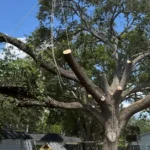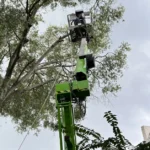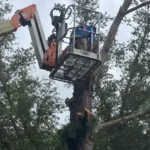
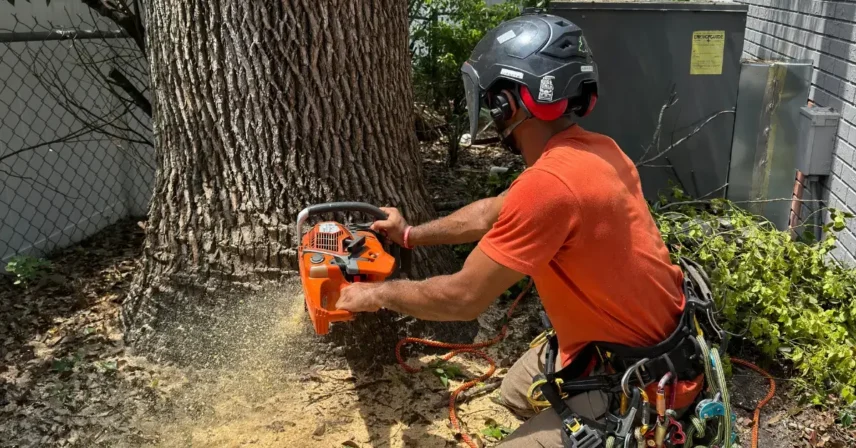
Tree removal looks simple enough — cut the trunk, let it fall, clean up. But tree work is consistently ranked among the most dangerous jobs in the country, even for trained professionals with specialized gear. For homeowners without that training? The risks multiply fast.
The Dangers Most Homeowners Don’t See
Chainsaw Kickback
Chainsaws cause roughly 36,000 injuries per year in the U.S., mostly during home use. The biggest risk is kickback — when the bar tip catches and the saw violently snaps back toward your face.
Pros protect themselves with cut-resistant chaps, face shields, and anti-kickback chains. Without that gear and training, one slip can be life-changing.
Unpredictable Falls
Trees don’t fall where you expect. Internal decay, wind, branch weight, and tension forces all affect direction. A 6-inch branch falling from 30 feet can generate fatal impact force.
Professional crews use rigging systems to control every piece as it’s cut. DIY attempts have no such safety net.
Power Line Hazards
Residential power lines carry 7,200 to 14,400 volts — instantly fatal on contact. Electricity can arc up to 10 feet through air, and wet branches conduct current. Only utility-certified arborists should work near lines.
Falls from Height
A fall from just 10-12 feet can cause spinal injuries, brain trauma, or death. Pros use rated harnesses, climbing ropes, and bucket trucks. Climbing a tree in sneakers with a chainsaw is a gamble with terrible odds.
What Pros Bring to the Job
- ISA-certified arborists trained in tree biology, hazard assessment, and safe work practices
- Specialized equipment — cranes, bucket trucks, chippers, and rigging hardware
- Insurance that protects you from liability if something goes wrong
- Experience reading how trees react to cuts, anticipating problems before they happen
The Real Cost Comparison
- ER visit for chainsaw injury: $10,000–$100,000+
- Fall-related spinal injury: $500,000–$2,000,000+ lifetime costs
- Property damage from a bad fall: $20,000–$100,000+
- Professional tree removal: $500–$5,000
The professional cost is a fraction of even the cheapest accident.
When DIY Is Fine
Some tasks are safe for homeowners:
- Pruning small branches from the ground with a pole pruner
- Removing small trees (under 4″ diameter) away from structures
- Picking up fallen branches after a storm
- Mulching around tree bases
The Bottom Line
If it involves a ladder, a chainsaw above waist height, or anything near power lines — call a professional. The savings aren’t worth the risk.