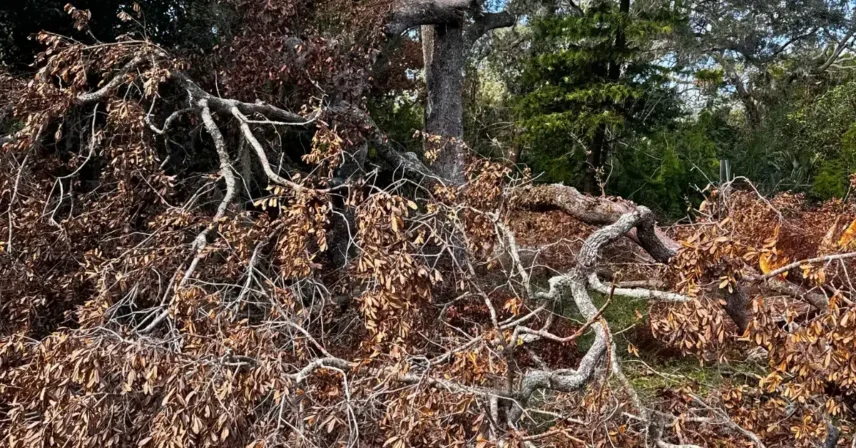
If you’ve lived in the Tampa Bay area for any length of time, you’ve probably noticed trees with yellow leaves. Maybe it’s your own oak tree, a neighbor’s citrus, or the crape myrtles in a commercial landscape. Yellow foliage is one of the most common tree problems we see in Pasco and Hillsborough County.
But here’s the good news: yellow leaves don’t always mean disease. More often, they indicate nutritional deficiencies — and those are treatable.
Florida’s sandy soils are beautiful for drainage but terrible for holding nutrients. Understanding what your trees need and how to provide it can transform struggling trees into thriving ones.
Why Florida Soils Are Challenging for Trees
Central Florida sits on ancient sand dunes and limestone. Our soils are:
Extremely sandy: 90%+ sand in many locations, which means:
- Nutrients leach away rapidly with every rain
- Organic matter breaks down quickly in the heat
- Water drains fast (good) but so do nutrients (bad)
High pH (alkaline): Especially in areas with limestone near the surface, soil pH can be 7.5-8.5. Many essential nutrients become “locked up” and unavailable to trees at high pH.
Low organic matter: Florida’s heat and humidity decompose organic matter rapidly, leaving soils deficient in the slow-release nutrients organic matter provides.
Result: Even in fertilized landscapes, trees often suffer nutritional deficiencies that manifest as yellow leaves, stunted growth, and increased susceptibility to pests and diseases.
The Most Common Tree Nutrient Deficiencies in Tampa Bay
Iron Deficiency (Iron Chlorosis)
What you’ll see:
- Yellowing between leaf veins while veins stay green (interveinal chlorosis)
- Symptoms appear on newest growth first
- Severe cases: entire leaves turn pale yellow or white
- Common in: oaks, maples, magnolias, citrus
Why it happens: Iron is abundant in Florida soils but becomes unavailable to plants when pH is high (above 7.0). Trees can’t absorb it even though it’s present.
How to fix it:
- Apply iron chelate (chelated iron products like Sprint 330 or Sequestrene)
- Lower soil pH with sulfur applications over time
- For severe cases: trunk injections of iron compounds
- Mulch with acidic materials (pine needles, oak leaves)
Timeline: Foliar sprays show improvement in 1-2 weeks. Soil amendments take months to show results.
Manganese Deficiency
What you’ll see:
- Interveinal chlorosis on new leaves (similar to iron deficiency)
- Symptoms on newest growth
- Common in: palms, live oaks, citrus, bottlebrush
Why it happens: Like iron, manganese becomes unavailable in alkaline soils. Over-liming landscapes or building on fill dirt often creates manganese deficiency.
How to fix it:
- Manganese sulfate applications (granular or liquid)
- Foliar sprays provide quick relief
- Address underlying pH issues
Magnesium Deficiency
What you’ll see:
- Broad yellow bands along leaf margins
- Symptoms start on OLDER leaves (opposite of iron/manganese)
- Extremely common in palms
- Also affects citrus, oaks, and many flowering trees
Why it happens: Sandy soils don’t hold magnesium well, and Florida’s heavy rains leach it rapidly.
How to fix it:
- Epsom salt (magnesium sulfate): 2-5 lbs per tree, 2-4 times yearly
- Dolomitic limestone (only if soil pH is low)
- Magnesium-containing fertilizers
Easy test: If older leaves are yellow but new growth is green, suspect magnesium deficiency first.
Nitrogen Deficiency
What you’ll see:
- Overall pale green to yellow color
- Older leaves affected first
- Stunted growth
- Smaller-than-normal leaves
Why it happens: Nitrogen is highly mobile and leaches rapidly from sandy soils. Turf grass competes heavily for available nitrogen.
How to fix it:
- Regular fertilization with complete fertilizer containing nitrogen
- Organic matter additions (compost, aged manure)
- Mulch rings around trees to reduce grass competition
Important: Too much nitrogen creates lush growth that’s attractive to pests, so balance is key.
Potassium Deficiency
What you’ll see:
- Leaf margins turn yellow, then brown and necrotic
- Older leaves affected first
- Leaf tip burn
- Very common in palms
Why it happens: Sandy soils don’t retain potassium. Regular fertilization of lawns often lacks adequate potassium for trees.
How to fix it:
- Potassium sulfate or potassium nitrate applications
- Palm fertilizers (8-0-12 or 8-2-12 formulations)
- Apply 3-4 times yearly for palms, 1-2 times yearly for hardwoods
pH Problems: The Root of Many Nutrient Issues
Ideal pH for most trees: 5.5-6.5 Common pH in Tampa Bay: 6.5-8.0+
When soil pH is too high (alkaline), iron, manganese, zinc, and other micronutrients become chemically unavailable. You can add these nutrients, but trees still can’t absorb them.
How to test pH: Soil test kits are available at garden centers, or send samples to the UF/IFAS Soil Testing Lab for comprehensive analysis ($7-$20).
How to lower pH:
- Sulfur applications (elemental sulfur, not aluminum sulfate)
- Acidic mulches (pine needles, pine bark)
- Iron sulfate applications (provides iron AND lowers pH)
- Avoid lime and high-pH fertilizers
Important: Lowering pH takes time — 6-12 months to see significant change. Work with existing pH by using chelated nutrients in the meantime.
Other Causes of Yellow Leaves (Not Nutritional)
Before dumping fertilizer on yellow trees, rule out:
Overwatering: Soggy soil suffocates roots and causes yellowing. Feel soil 4-6 inches down — if it’s muddy, stop watering.
Root damage: Construction, trenching, or grade changes can sever roots, causing sudden yellowing.
Diseases: Laurel wilt, oak wilt, and root rots cause yellowing that won’t respond to fertilization.
Natural leaf drop: Many trees drop leaves in spring (live oaks, laurel oaks). Yellow leaves before dropping is normal.
The Right Way to Fertilize Tampa Bay Trees
1. Test first: Guessing causes more problems than it solves. Get a soil test.
2. Use slow-release fertilizers: Quick-release fertilizers leach away in our sandy soils. Look for products with 50%+ slow-release nitrogen.
3. Apply in the root zone: Spread fertilizer in a circle from the trunk to beyond the drip line (edge of canopy), not just around the base.
4. Timing matters: Fertilize in early spring (March) and early fall (September). Avoid fertilizing in late fall (promotes tender growth before winter) or mid-summer (stresses trees during heat).
5. Don’t overdo it: More isn’t better. Follow label rates. Excess fertilizer can burn roots and contaminate groundwater.
6. Supplement micronutrients: Use a complete fertilizer with iron, manganese, zinc, and boron, or apply these separately as needed.
Special Considerations for Different Tree Types
Oaks: Need acidic soil (5.5-6.0 pH). Often show iron and manganese deficiency in alkaline soils. Avoid high-phosphorus fertilizers.
Palms: Heavy feeders needing frequent potassium and magnesium. Use palm-specific fertilizers (8-0-12 + micronutrients) quarterly.
Citrus: Require regular fertilization (3-4 times yearly) with citrus-specific formulations containing micronutrients. Very sensitive to pH.
Native trees (live oak, sabal palm, red maple): Generally less demanding but still benefit from periodic fertilization in landscape settings.
When to Call a Professional
If your trees show:
- Persistent yellowing despite fertilization
- Rapid decline or wilting
- Yellowing on only one side of the tree
- Fungal growth or bark damage along with yellowing
Contact Grand Oaks for a professional diagnosis. Certified arborists can:
- Perform comprehensive tree health assessments
- Conduct soil testing and foliar analysis
- Recommend and apply appropriate treatments
- Distinguish between nutritional and disease problems
Don’t let nutrient deficiencies weaken your trees. Healthy trees resist pests, diseases, and storms better.