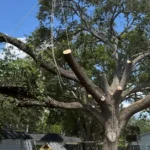
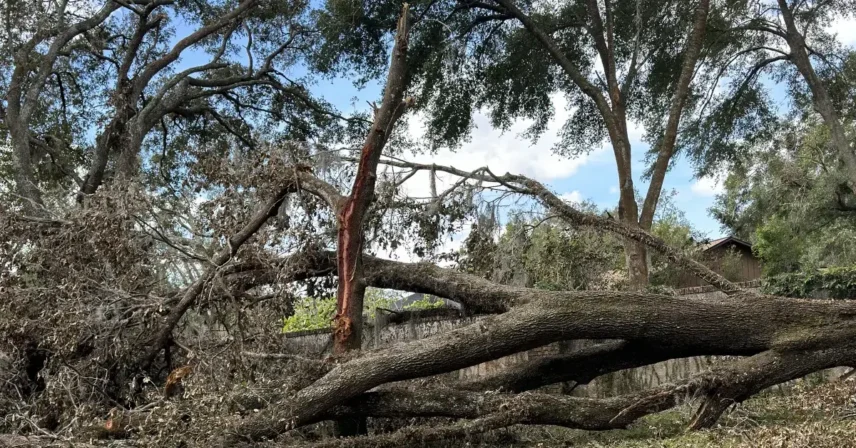
You’ve just weathered another Florida storm. The winds have died down, power is slowly coming back, and you’re surveying the damage to your property. That’s when you notice it: your once-beautiful oak tree is now leaning dangerously toward your house, or that large pine has split down the middle, or branches are scattered across your roof.
Hurricane and tropical storm damage to trees is one of the most stressful situations Tampa Bay homeowners face. These aren’t just landscape features—damaged trees are active hazards that can cause catastrophic property damage or injuries if they fail completely.
If you’re dealing with storm-damaged trees in Pasco or Hillsborough County, here’s exactly what you need to know and do.
Immediate Safety First: Assessing Storm-Damaged Trees
Before you do anything else, assess whether you’re dealing with an immediate emergency:
Signs of Imminent Danger (Call for Emergency Removal NOW)
🚨 Call a professional tree service immediately if:
- Tree or large branch is actively leaning on your house
- Pressing against roof, walls, or windows
- Weight increasing as wind shifts
- Creaking or cracking sounds
- Tree is in contact with power lines
- NEVER touch or approach trees on power lines
- Call your utility company first (TECO, Duke Energy, etc.)
- Stay away—assume all downed lines are live
- Tree has fallen on vehicle or other property
- Blocking driveways or roads
- Damaging structures
- Creating access problems for emergency vehicles
- Major splitting or breaking is in progress
- Trunk has split but hasn’t completely separated
- Large branches hanging by bark or small wood connections
- Tree is “barber chairing” (trunk splitting vertically)
- Tree has uprooted and is suspended or leaning
- Root ball has lifted out of ground
- Tree leaning at steep angle (45+ degrees)
- Obvious instability when wind blows
DO NOT attempt to remove these yourself. This is professional-level emergency work requiring specialized equipment and expertise.
Hazardous But Not Immediate (Schedule Urgent Removal This Week)
⚠️ Schedule professional assessment within 24-48 hours if:
- Tree has significant lean that developed during the storm
- New lean of 15+ degrees
- Soil mounding or cracking around base
- Tree rocks or moves when pushed
- 50% or more of canopy has broken off
- Massive canopy loss
- Major limbs torn away
- Top of tree snapped off
- Large branches are broken but hanging (widow makers)
- Branches hanging by bark
- Heavy limbs suspended in canopy
- Risk of sudden falling
- Trunk has visible cracks or splits
- Deep vertical cracks in main trunk
- Horizontal cracking around trunk
- Splits at major branch unions
- Extensive root exposure or damage
- Roots torn or severed
- Large roots exposed by erosion
- Root ball partially lifted
These trees may not fail immediately, but they’re structurally compromised and dangerous. Don’t delay assessment.
Can Wait for Normal Scheduling (But Don’t Ignore)
📅 Schedule professional evaluation within 1-2 weeks if:
- Minor to moderate canopy loss (under 50%)
- Small to medium branch damage
- Surface root exposure (without lifting)
- Bark damage or wounds
- Lean less than 15 degrees (if present before storm)
Even “minor” damage should be professionally evaluated. What looks stable may have hidden structural problems.
What NOT to Do After Storm Damage
In the chaos after a storm, homeowners often make dangerous or costly mistakes:
DON’T Start Cutting Without Assessment
❌ Don’t:
- Climb into damaged trees (structure is compromised)
- Cut large hanging branches yourself (can swing unpredictably)
- Use chainsaws if you’re not trained (storm damage creates unique hazards)
- Cut trunk sections under tension (can spring violently when released)
Why: Storm-damaged trees are unpredictable. Branches under tension can spring when cut, crushing or striking anyone nearby. Climbing compromised trees can cause sudden failure.
DON’T Hire the First Person Who Knocks on Your Door
❌ Don’t:
- Hire “storm chasers” going door-to-door
- Accept services from unlicensed, uninsured operators
- Pay cash up-front to people you just met
- Agree to work without written estimates
Why: After major storms, scammers and unqualified operators flood affected areas. They take deposits and disappear, do substandard work, damage property, or get injured on your property (leaving you liable).
How to Identify Storm Chasers:
- Out-of-state license plates
- No local business address
- Pressure for immediate cash payment
- Can’t provide proof of insurance
- No references from the local area
DON’T Remove Protected Trees Without Documentation
❌ Don’t:
- Remove large trees without photos of damage
- Fail to document storm conditions
- Skip notifying your HOA (even in emergencies)
- Ignore county permit requirements
Why: Even though emergency removal is allowed, you may need to file post-removal notifications. Without documentation of the emergency, you could face violations for removing protected trees.
DON’T Assume Insurance Will Cover Everything
❌ Don’t:
- Start cleanup before documenting damage
- Fail to photograph damage from multiple angles
- Remove all evidence before adjuster visits
- Accept first settlement without reviewing policy
Why: Insurance coverage for tree damage has specific limitations. Poor documentation can result in claim denials or reduced payouts.
Emergency Tree Removal Process in Tampa Bay
Here’s the correct process for handling hurricane-damaged trees:
Step 1: Ensure Personal Safety
Immediate actions:
- Evacuate areas under damaged trees
- Mark off hazard zones
- Keep children and pets away
- Turn off utilities if trees are near lines
If trees are on power lines or have damaged utility connections, call your utility company before calling a tree service.
Step 2: Document Everything
Before anyone touches the tree:
Photograph:
- Damaged tree from multiple angles
- Root exposure or lean
- Property damage (roof, fence, vehicles, etc.)
- Branches or debris on structures
- Overall scene showing storm context
Video:
- Walk around property showing all damage
- Narrate what you’re seeing and when storm occurred
- Show any hazards or instability
Written notes:
- Date and time you discovered damage
- Storm date and conditions (wind speeds if known)
- Description of how tree looked before vs. after
- Any changes you’ve noticed since storm (increasing lean, etc.)
Why this matters: Insurance claims, HOA notifications, and county permit exemptions all require documentation that damage was storm-related.
Step 3: Contact Your Insurance Company
Call your insurance agent or claims line:
- Report property damage
- Ask about tree removal coverage
- Request adjuster visit
- Confirm whether you should wait for adjuster or proceed with emergency removal
Important questions to ask:
- “Will emergency tree removal be covered?”
- “Should I wait for an adjuster before removing the tree?”
- “What’s my coverage limit for tree removal?”
- “Do I need multiple estimates?”
- “Will you cover damage the tree caused to structures?”
Step 4: Call Professional Emergency Tree Service
Contact a licensed, insured tree service:
At Grand Oaks Tree Service, we offer 24/7 emergency storm damage response throughout Pasco and Hillsborough County.
What we’ll do:
- Assess the hazard and provide immediate safety recommendations
- Provide emergency stabilization if needed
- Give you a written estimate for emergency removal
- Coordinate with insurance adjusters if requested
- Document everything for insurance and county purposes
Red flags when calling tree services:
- Can’t provide immediate proof of insurance
- Pressure for cash payment before work begins
- Won’t provide written estimates
- Claim they can start immediately without assessment
Step 5: Emergency Removal
Professional emergency tree removal includes:
Safety measures:
- Establishing safety zones
- Coordinating with utility companies if needed
- Using proper rigging to control tree sections
- Protecting undamaged property
Systematic removal:
- Stabilizing the tree if possible
- Removing weight from structures first
- Sectioning tree safely
- Grinding stump or leaving flush-cut for later grinding
Documentation:
- Photos before, during, and after removal
- Written description of emergency nature
- Debris and damage documentation
- Completion certification
Step 6: Post-Removal Notifications
Within 24-72 hours of emergency removal:
Notify your HOA (if applicable):
- Provide emergency removal notice
- Include photos of damage
- Explain safety hazard
- Confirm compliance with replacement requirements
Notify Pasco or Hillsborough County (if protected tree):
- File emergency removal notification
- Provide photos documenting storm damage
- Include arborist letter if available
- Confirm any mitigation requirements
Follow up with insurance:
- Submit tree service invoice
- Provide all photos and documentation
- Submit claim for any property damage caused by tree
Understanding Insurance Coverage for Storm-Damaged Trees
Tree damage insurance is confusing. Here’s what you need to know:
What’s Typically Covered
Most Florida homeowners policies cover:
Tree removal (with limitations):
- Trees that have fallen on insured structures (house, garage, fence)
- Trees blocking driveways or wheelchair ramps
- Typical limit: $500-1,000 per tree
- Overall limit: $5,000-10,000 for all trees
Damage caused by fallen trees:
- Roof damage
- Structural damage to buildings
- Damage to other insured property
- Subject to your deductible
Debris removal:
- Removal of tree debris from property
- Usually part of tree removal limits
What’s Typically NOT Covered
Standard policies usually exclude:
Trees that didn’t hit anything:
- Trees that fell in the yard
- Leaning trees that haven’t fallen
- Damaged trees still standing
- “Preventive” removal
Landscaping trees:
- Trees valued as landscape features
- Cost to replace mature trees
- Loss of property value due to tree loss
Negligence or maintenance:
- Trees that were dead before the storm
- Trees you knew were hazardous
- Damage that could have been prevented with proper maintenance
Certain named storms:
- Some policies have separate hurricane deductibles
- May be percentage-based (2-10% of coverage)
- Significantly higher than standard deductible
Maximizing Your Insurance Recovery
Tips for better claim outcomes:
1. Document, document, document
- More photos is always better
- Video provides context photos miss
- Date/timestamp all documentation
- Save weather reports showing storm conditions
2. Understand your policy limits
- Know your tree removal limits before filing
- Understand your deductible
- Be aware of hurricane deductible if applicable
3. Get multiple estimates
- Some policies require 2-3 estimates
- Helps establish fair market value
- Provides negotiating leverage
4. Don’t accept first offer without review
- Insurance companies often start with low offers
- Review every line item
- Question inadequate amounts
- Consider hiring public adjuster for large claims
5. Document ALL property damage
- Not just tree removal—what did the tree damage?
- Roof, gutters, siding, fences, landscaping
- Hidden damage may not be apparent initially
- Have contractor inspection of impacts
County Permit Requirements for Storm-Damaged Trees
Both Pasco and Hillsborough County allow emergency removal of storm-damaged trees without pre-approval permits, but there are requirements:
Emergency Removal Exemption
When you DON’T need a pre-removal permit:
- Tree poses imminent danger due to storm damage
- Immediate removal necessary for safety
- Tree is actively threatening structures or blocking essential access
What you MUST do:
- Document storm damage thoroughly (photos, video)
- File post-removal notification within 24-72 hours
- Provide proof tree was storm-damaged
- May need arborist certification of hazard
What Qualifies as “Emergency”
Counties define emergencies narrowly:
✅ Qualifies as emergency:
- Tree leaning on house
- Tree blocking only driveway access
- Large branches hanging over occupied areas
- Tree with visible structural failure threatening structures
❌ Doesn’t qualify as emergency:
- “Tree might fall in the next storm”
- Minor branch damage
- Tree you’ve been meaning to remove
- Cosmetic storm damage
If you claim emergency removal but the tree wasn’t actually an imminent threat, you could face penalties.
Post-Removal Requirements
After emergency removal of protected trees:
File notification:
- Contact county development services
- Submit emergency removal notification form
- Provide documentation of storm and damage
- Include photos and arborist letter
Mitigation may be required:
- Replacement tree planting
- May be reduced for genuine emergencies
- Timelines typically extended after major storms
Timeline:
- Pasco County: 72 hours for notification
- Hillsborough County: 48-72 hours for notification
- Penalties for late notification possible
At Grand Oaks, we help clients with all post-removal notifications and documentation.
Assessing Whether to Remove or Save Storm-Damaged Trees
Not every damaged tree needs removal. Here’s how to decide:
Trees That Can Often Be Saved
Good candidates for preservation:
Healthy trees with minor damage:
- Less than 50% canopy loss
- No trunk damage
- Sound root system
- No significant lean
Young, vigorous trees:
- Under 20 years old
- Fast-growing species
- Good health before storm
- Strong compartmentalization ability
Trees with correctable damage:
- Broken branches that can be pruned
- Minor wounds that can be cleaned
- Repairable structural damage
Trees That Should Be Removed
Poor candidates for preservation:
Severe structural damage:
- More than 50% canopy loss
- Trunk splitting or major cracks
- Root failure or severe lean
- Combination of multiple damage types
Already compromised trees:
- Were declining before storm
- Have existing diseases or pests
- Old trees with limited recovery potential
- History of previous storm damage
High-risk locations:
- Near structures
- Over occupied areas
- Already-hazardous trees made worse by storm
Species-specific considerations:
- Some species recover better than others
- Oaks typically recover well from moderate damage
- Pines rarely recover from major damage
- Palms are usually resilient unless trunk is damaged
Professional Assessment
ISA-certified arborists evaluate:
- Percentage of canopy lost
- Trunk and branch structural integrity
- Root system condition
- Tree species and age
- Location and risk factors
- Cost of restoration vs. removal
This assessment should happen within days of storm damage, not weeks or months later.
Preventing Tree Damage in Future Storms
Tampa Bay will face more hurricanes. Here’s how to minimize tree damage:
Pre-Storm Tree Care
Regular maintenance reduces storm damage:
Pruning:
- Remove dead, diseased, or weak branches
- Thin dense canopies to allow wind passage
- Reduce end weight on long horizontal branches
- Address co-dominant stems and weak unions
Health care:
- Maintain tree vigor through proper watering
- Fertilize appropriately
- Address pest and disease issues promptly
- Reduce stress that weakens trees
Structural support:
- Cable and brace weak unions
- Support heavy limbs
- Address leans before storms strike
Best timing: Prune in late winter/early spring before hurricane season (June-November).
Choose Storm-Resistant Species
When planting new trees, choose species known for hurricane resistance:
Excellent storm resistance:
- Live Oak (Quercus virginiana)
- Sabal Palm (Sabal palmetto)
- Dahoon Holly (Ilex cassine)
- Bald Cypress (Taxodium distichum)
- Southern Magnolia (Magnolia grandiflora)
Poor storm resistance:
- Laurel Oak (Quercus laurifolia) – brittle wood
- Pine species – shallow roots, top-heavy
- Eucalyptus – weak wood
- Chinese Elm – brittle branches
- Bradford Pear – very weak structure
Proper Planting and Young Tree Care
Storm resistance starts at planting:
- Plant at proper depth (root flare visible)
- Don’t plant too close to structures
- Provide adequate space for mature size
- Stake properly for first year only
- Establish strong structure through early pruning
Pre-Hurricane Season Checklist
Every May, before hurricane season:
✅ Inspect all trees for dead or weak branches ✅ Schedule pruning for high-risk trees ✅ Address any visible diseases or pests ✅ Check trees near structures for hazards ✅ Verify you have contact info for emergency tree service ✅ Photograph trees for insurance documentation ✅ Remove any dead trees you’ve been putting off
During Hurricane Warnings
When storm is approaching:
❌ Don’t prune (weakens tree and creates entry points for disease) ❌ Don’t remove branches (no time to do it properly) ❌ Don’t wrap or tie trees (can cause more damage)
✅ Do:
- Move outdoor furniture and objects that could become projectiles
- Document tree conditions (photos)
- Secure loose items
- Identify safe rooms away from large trees
Grand Oaks Emergency Storm Response
When Tampa Bay gets hit by hurricanes or tropical storms, Grand Oaks Tree Service is ready:
24/7 Emergency Service
We provide:
- Around-the-clock emergency response
- Rapid assessment of storm-damaged trees
- Immediate removal of hazardous trees
- Emergency stabilization when immediate removal isn’t possible
Storm Preparation Services
Before hurricane season:
- Tree risk assessments
- Preventive pruning and thinning
- Structural support installation
- Removal of high-risk trees
Post-Storm Services
After the storm passes:
- Property-wide damage assessment
- Prioritized removal planning (most dangerous first)
- Insurance documentation assistance
- County notification filing
- Debris removal and cleanup
- Stump grinding
- Replacement tree recommendations
Why Choose Grand Oaks for Storm Damage
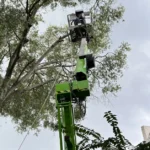
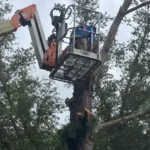
✅ Licensed and fully insured (critical for liability protection) ✅ ISA-certified arborists trained in storm damage assessment ✅ Local company serving Tampa Bay for 20+ years ✅ Proven storm response (we’ve handled thousands of storm-damaged trees) ✅ Insurance-friendly (we work with adjusters regularly) ✅ Fair pricing (no storm-chaser price gouging) ✅ Complete documentation (for insurance and county) ✅ Professional equipment (cranes, bucket trucks, specialized rigging)
Don’t Wait for the Next Storm
If you have trees that concern you, don’t wait until they’re damaged to take action. Preventive tree care is far less expensive than emergency removal.
Schedule your pre-hurricane season tree risk assessment with Grand Oaks Tree Service today.
We serve all of Pasco County, Hillsborough County, Wesley Chapel, Tampa, and the entire Tampa Bay area.
For emergencies: Call our 24/7 emergency hotline For assessments and preventive care: Contact us online or call during business hours