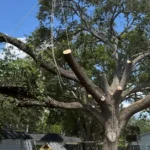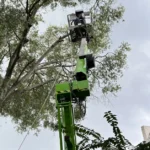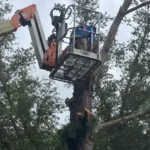
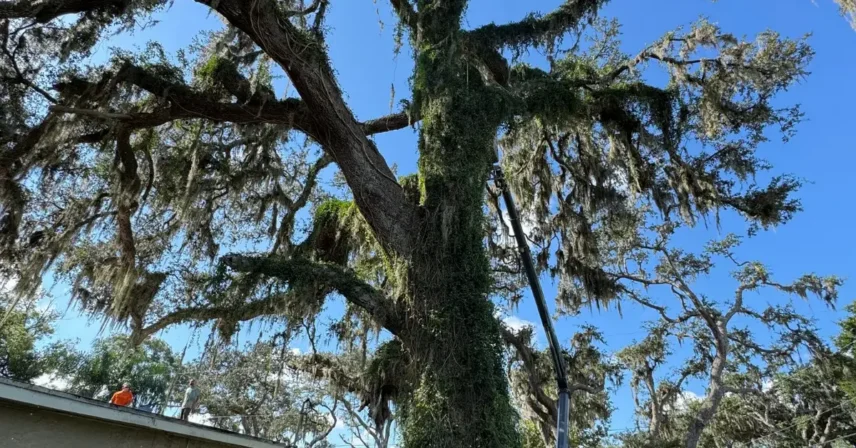
Oak trees are the backbone of Florida’s urban forest. These majestic trees provide incredible shade, storm protection, and character to Tampa Bay properties. In Pasco and Hillsborough County, massive live oaks can be hundreds of years old—older than the homes they shade.
But what happens when an oak tree becomes a problem? Maybe it’s diseased, damaged by storms, or growing too close to your home. Can you just remove it? Should you?
The answer is complicated. Oak trees receive special protection in Florida, and removing them requires careful consideration of permits, alternatives, and environmental impact. Here’s everything Tampa Bay homeowners need to know about oak tree removal.
Why Oak Trees Are Protected in Florida
Before we discuss removal, let’s talk about why oaks receive special protection in the first place.
The Value of Oak Trees
Oak trees provide massive benefits to Florida communities:
Environmental Benefits:
- Absorb 10,000+ gallons of water annually, reducing flooding
- Filter air pollutants and produce oxygen
- Reduce urban heat island effects (can lower ambient temperature by 10-20°F)
- Sequester carbon, helping combat climate change
- Prevent soil erosion with extensive root systems
Wildlife Habitat:
- Support hundreds of species of insects, birds, and mammals
- Acorns feed squirrels, deer, turkeys, and other wildlife
- Dense canopies provide nesting sites for birds
- Native oak trees support more life than any other tree group in Florida
Storm Protection:
- Deep root systems make oaks highly wind-resistant
- Live oaks especially are among the most hurricane-resistant trees
- Reduce wind speeds protecting buildings and other vegetation
Property Value:
- Mature oaks can increase property values by 10-20%
- Homes with oak trees sell faster and for higher prices
- Historic oaks are often featured in property listings
- Create distinctive, memorable landscapes
Cultural Significance:
- Many oaks in Tampa Bay are historic landmarks
- Provide continuity and character to neighborhoods
- Feature in local history and family memories
Given these benefits, local governments work hard to preserve oak trees through protection ordinances.
Oak Species in Tampa Bay
Not all oaks are created equal, and different species receive different levels of protection:
Live Oak (Quercus virginiana)
- The iconic Florida oak tree
- Evergreen (keeps leaves year-round)
- Massive spreading canopy
- Can live 200-300+ years
- Extremely hurricane-resistant
- Most protected species in local ordinances
Laurel Oak (Quercus laurifolia)
- Semi-evergreen (may drop leaves in late winter)
- More upright growth than live oak
- Faster growing but shorter-lived (60-80 years typical)
- Moderate storm resistance
- Protected in most county ordinances
Sand Live Oak (Quercus geminata)
- Smaller than live oak
- Naturally occurs in scrub habitats
- Very drought tolerant
- Often shrubby but can reach 40+ feet
- Protected in conservation areas
Shumard Oak (Quercus shumardii)
- Deciduous (loses leaves in winter)
- Tall with upright branching
- Excellent shade tree
- Good fall color
- Less common in urban areas
Water Oak (Quercus nigra)
- Deciduous
- Common in wet areas
- Shorter-lived (60-80 years)
- More prone to disease than live oak
- Moderate protection in ordinances
Local Protection Ordinances
Both Pasco and Hillsborough County protect oak trees, with Hillsborough having stricter regulations:
Pasco County:
- Oak trees 24 inches diameter or larger require permits
- Protected during development and land clearing
- Heritage tree designation for exceptional specimens
Hillsborough County:
- Oak trees 24 inches diameter or larger require permits
- Live oaks receive highest protection
- “Grand Tree” designation for trees 30+ inches diameter
- Significant penalties for unpermitted removal
City of Tampa:
- Among Florida’s strictest tree ordinances
- Oak trees 8+ inches diameter require permits
- High replacement ratios required (often 4:1 or more)
- Substantial fines for violations
HOA Restrictions:
- Many Wesley Chapel and Tampa Bay HOAs prohibit oak removal without approval
- Architectural review board approval often required
- May have stricter rules than county ordinances
When Oak Tree Removal Is Justified
Despite protection ordinances, there are legitimate reasons to remove oak trees:
1. The Tree Is Dead or Dying
Dead oak trees pose significant hazards:
Signs Your Oak Is Dead:
- No leaves by late spring/early summer
- Bark falling off in large sections
- Extensive fungal growth (mushrooms at base)
- Brittle, dry branches that snap easily
- No green cambium layer under bark (do the scratch test)
Why Dead Oaks Are Dangerous:
- Oak wood is extremely dense and heavy
- Dead branches (widow makers) can fall without warning
- Entire tree can topple during storms
- Becomes habitat for termites and other pests
- Continues to deteriorate over time
Permit Requirements: Even for dead trees, you typically need documentation from a certified arborist confirming the tree is dead. Take photos, get an arborist report, and file for a permit (or exemption) before removal.
2. The Tree Has Severe Disease
Some oak diseases are fatal and may justify removal:
Oak Wilt (rare in Florida but present):
- Fungal disease that clogs tree’s vascular system
- Causes rapid decline and death
- Can spread to nearby oaks
- Infected trees should be removed promptly to prevent spread
Hypoxylon Canker:
- Common on stressed oak trees
- Causes wood decay
- Usually indicates the tree is already dying
- Appears as gray or brown powdery fungus on bark
Root Rot (various fungi):
- Attacks root system causing instability
- Mushrooms at base indicate advanced infection
- Tree may look healthy above ground but be structurally unsound
- Resistograph testing can detect internal decay
Important: Not all diseases require removal. Many oak health issues can be managed with proper care. Always get an arborist assessment before deciding on removal.
3. Storm Damage Has Compromised Structure
Florida’s hurricanes and thunderstorms can severely damage oaks:
Damage That May Require Removal:
- Loss of 50%+ of the canopy
- Major trunk splitting or breaking
- Severe lean developing after storm (indicating root failure)
- Large sections of roots exposed or torn
- Combination of canopy loss and trunk damage
Damage That Can Often Be Addressed Without Removal:
- Loss of individual large branches (can be pruned)
- Minor leaning (can be monitored or corrected)
- Partial canopy loss (tree may recover)
- Surface root exposure (can be stabilized)
After major storms, resist the urge to remove damaged oaks immediately. Oaks are resilient and can often recover from significant damage. Get an arborist assessment before deciding.
4. The Tree Threatens Structures or Infrastructure
Sometimes oak trees are simply in the wrong location:
Legitimate Structural Concerns:
- Roots have damaged foundation, causing structural problems
- Tree is within 10 feet of house and has caused repeated roof damage
- Major branches overhang roof, and pruning isn’t sufficient
- Roots have destroyed septic system or plumbing
- Tree is damaging driveway or hardscaping beyond reasonable repair
Important Note: “I don’t want leaves in my gutters” or “the tree shades my lawn” are NOT legitimate reasons for permit approval. You need documented structural damage or genuine safety hazards.
5. The Tree Creates Genuine Safety Hazards
Safety always comes first:
Hazards That Justify Removal:
- Tree has significant lean toward house or occupied areas
- Large cavities or hollow sections compromise structural integrity
- Tree is located where it could fall on power lines
- Multiple large dead branches that can’t be safely pruned
- Root system compromised by construction or erosion
Risk Assessment Required: Counties require professional risk assessment for hazard removals. Certified arborists use standardized risk assessment protocols to evaluate:
- Target (what could be hit if tree fails)
- Likelihood of failure
- Consequences of failure
When You Probably Can’t Remove an Oak Tree
Let’s be honest about situations where removal permits are unlikely to be approved:
The Tree Is Healthy
If your oak is vigorous and healthy with no structural defects, removal permits are almost never approved. “I don’t like it” isn’t sufficient justification.
You Want More Sunlight
While understandable, wanting more sun for your lawn or garden isn’t grounds for removing protected oak trees. Consider shade-tolerant landscaping instead.
You’re Worried About Future Problems
“It might fall someday” or “it could damage my roof eventually” aren’t sufficient for current removal. Trees must pose present, documentable hazards.
You Want to Build in That Spot
In most cases, you need to design your project around protected trees, not remove trees to accommodate projects. Some exceptions exist for permitted construction, but you’ll need to demonstrate no alternatives exist.
It’s Inconvenient
Acorns, leaves, twigs, and shade are all normal features of oak trees. Routine maintenance needs don’t justify removal of protected trees.
The Oak Tree Removal Permit Process
If you have legitimate grounds for oak removal, here’s how the permit process works:
Step 1: Professional Assessment
Before applying, hire a certified arborist to:
- Confirm the species
- Measure the diameter (at 4.5 feet height)
- Document condition and any defects
- Take photographs
- Prepare a professional report
Cost: $200-600 for arborist assessment and report
Step 2: Determine Permitting Authority
Confirm whether you need permits from:
- Pasco County Development Services
- Hillsborough County Development Services
- City of Tampa Tree and Landscape Services
- Your HOA (may be required in addition to county)
Step 3: Gather Documentation
You’ll need:
- Arborist report with photos
- Property survey showing tree location
- Justification for removal (safety, disease, etc.)
- Proof of property ownership
- HOA approval letter (if applicable)
Step 4: Submit Application
File your application with required fees:
- Pasco County: $50-150 typical
- Hillsborough County: $100-300 typical
- City of Tampa: $150-400 typical
Step 5: Review Period
The county will review your application:
- Typical timeline: 3-6 weeks
- May require site inspection
- May request additional documentation
- May require independent arborist review
Step 6: Mitigation Requirements
If approved, you’ll likely need to:
Plant Replacement Trees:
- Typical ratio: 2-5 replacement trees per oak removed
- Specific species may be required (native trees)
- Size requirements (usually 3-7 gallon containers minimum)
- Maintenance requirements (must survive 2 years minimum)
Or Pay Into Tree Fund:
- If planting isn’t feasible on your property
- Typical cost: $300-1,000+ depending on tree size
- Fund supports community tree planting
Total Typical Mitigation Costs: $500-3,000 depending on tree size and jurisdiction
Alternatives to Oak Tree Removal
Before committing to removal, consider these alternatives:
Strategic Pruning
Professional pruning can address many concerns:
- Remove dead, diseased, or hazardous branches
- Raise canopy to allow more light underneath
- Reduce weight on limbs overhanging structures
- Improve structure to reduce future problems
When Pruning Is Sufficient:
- Only specific branches are problems
- Tree is otherwise healthy
- Structural concerns are minor
- You want to preserve the tree
Cost: $400-2,000 depending on tree size and pruning extent
Crown Reduction
For oaks that have grown too large:
- Reduce canopy size by 15-25%
- Decrease wind resistance
- Reduce weight stress on trunk and branches
- Maintain natural appearance
Important: Oak pruning should only be done by certified arborists. Improper pruning can create new problems or stress the tree.
Cabling and Bracing
For structurally compromised oaks worth saving:
- Install cables to support weak branch unions
- Brace split trunks
- Reduce risk of failure
- Can extend tree’s safe lifespan by decades
When This Works:
- Tree has high value (historic, location, size)
- Structural defect is localized
- Tree is otherwise healthy
- Cost-effective compared to removal and replacement
Cost: $500-2,000 for professional cable/brace installation
Root Management
For oaks causing foundation or infrastructure issues:
- Root barriers can redirect future growth
- Root pruning can eliminate specific problem roots
- Usually combined with regular monitoring
- May be required to maintain insurance coverage
Plant Around the Tree
If the issue is lack of sun or poor lawn growth:
- Choose shade-tolerant groundcovers
- Create naturalized landscape under canopy
- Add shade-loving plants (azaleas, ferns, hostas)
- Embrace the shade with outdoor living spaces
Many homeowners who initially wanted oak removal end up loving the shade once they redesign their landscape to work with it.
What Oak Tree Removal Actually Costs
If removal is approved, expect these costs:
Removal Service Costs
Small oak trees (under 30 feet): $800-1,500 Medium oaks (30-50 feet): $1,500-3,500 Large oaks (50-70 feet): $3,500-7,000 Massive oaks (70+ feet): $7,000-15,000+
Why Oak Removal Is Expensive:
- Oak wood is extremely dense and heavy
- Massive branches require extensive rigging
- Takes multiple days for large specimens
- Requires specialized equipment (cranes often needed)
- High risk work requiring expert arborists
Additional Costs
Stump grinding: $300-800 (oaks have extensive root systems) Debris hauling: Usually included, or $200-500 extra Log removal: $300-1,000 if you want massive trunk sections removed Root removal: $500-2,000 for extensive root excavation Permit fees: $50-400 Arborist report: $200-600 Mitigation planting: $300-1,500 for replacement trees
Total Project Cost
For a large protected oak with permits and mitigation: $5,000-20,000 is typical for complete removal and compliance
This is why alternatives should always be explored first. Strategic pruning at $800-2,000 often solves the problem at a fraction of removal cost.
How to Protect Oak Trees During Construction
If you’re building or renovating near oak trees, protection is critical (and often required by permit):
Critical Root Zone (CRZ)
Oak trees have extensive root systems:
- Roots extend 2-3 times beyond canopy edge
- Most critical roots are in top 18 inches of soil
- Damage to roots can kill the tree or make it unstable
Protected Zone: Most ordinances require protecting a circle around the trunk:
- Minimum: 1 foot of radius per inch of trunk diameter
- Example: 24-inch diameter oak needs 24-foot radius protection
Protection Requirements
During construction:
- Install tree protection fencing around CRZ
- No digging, grading, or soil compaction within CRZ
- No material storage under canopy
- Avoid grade changes that affect roots
- Route utilities around root zones
Penalties for Damage: Damaging protected oaks during construction can result in:
- Stop work orders
- Fines of $5,000-15,000+ per tree
- Required mitigation (extensive replanting)
- Difficulty obtaining future permits
Finding the Right Tree Service for Oak Work
Oak tree work requires expertise. Here’s what to look for:
Certifications and Qualifications
Hire services with:
- ISA Certified Arborists on staff
- Tree Risk Assessment Qualified (TRAQ) certification
- Specialized training in oak tree care
- Knowledge of local ordinances
At Grand Oaks Tree Service, our ISA-certified arborists have extensive experience with oak tree assessment, preservation, and removal.
Insurance and Licensing
Verify the company has:
- General liability insurance ($1M+ coverage)
- Worker’s compensation insurance
- Proper business licensing
- Bonding (for large projects)
Never hire uninsured tree services for oak work—the liability is too high.
Oak Tree Experience
Ask potential companies:
- How many protected oak trees have you removed?
- Can you provide references for similar projects?
- Do you handle the permit process?
- What’s your approach to preservation alternatives?
Red Flags to Avoid
Don’t hire companies that:
- Suggest removing oak trees without mentioning permits
- Offer to remove protected trees “off the books”
- Can’t provide proof of insurance
- Give suspiciously low quotes (may indicate cutting corners)
- Pressure you to decide immediately
Grand Oaks’ Oak Tree Services
At Grand Oaks Tree Service, we specialize in oak tree care throughout Pasco and Hillsborough County:
Assessment and Consultation
- Free initial property assessments
- Professional oak tree health evaluations
- Risk assessment for hazardous trees
- Permit requirement guidance
- Preservation alternatives consultation
Preservation Services
- Expert oak tree pruning
- Crown reduction and weight reduction
- Cabling and bracing installation
- Disease diagnosis and treatment
- Root management and protection
Removal Services (When Necessary)
- Permit application assistance
- Complete documentation for county review
- Safe, professional removal
- Stump grinding and root removal
- Mitigation planting
- Full debris removal
Construction Protection
- Tree protection zone installation
- Construction monitoring to prevent damage
- Root zone management during building
- Post-construction health assessment
Why Choose Grand Oaks:
- ISA-certified arborists with oak tree expertise
- Fully insured and licensed
- 20+ years serving Tampa Bay
- Expertise in local permit processes
- Commitment to tree preservation when possible
- Honest advice, even when it means less work for us
The Bottom Line on Oak Tree Removal
Oak trees are valuable assets that deserve careful consideration before removal. Here’s our advice:
Before deciding on removal:
- Get a professional arborist assessment
- Explore all alternatives (pruning, cabling, etc.)
- Understand permit requirements
- Calculate total costs including mitigation
- Consider long-term impact on property
Oak removal is justified when:
- Tree is dead or dying beyond recovery
- Severe disease threatens tree or neighbors
- Tree poses documented safety hazards
- Structural damage is irreparable
- No reasonable alternatives exist
Oak removal is NOT justified for:
- Minor inconveniences
- Aesthetic preferences
- Desire for more sunlight
- Routine maintenance needs
- Fear of what “might” happen
Need Expert Advice on Your Oak Tree?
Don’t make this decision alone. Grand Oaks Tree Service offers free oak tree consultations throughout Pasco and Hillsborough County.
Our certified arborists will:
- Assess your oak tree’s health and structure
- Explain your options (removal vs. alternatives)
- Guide you through permit requirements if removal is necessary
- Provide honest recommendations in your best interest
Schedule your free oak tree consultation today. We serve Wesley Chapel, Tampa, and all of Tampa Bay.
Contact Grand Oaks now or call to speak with an oak tree specialist.