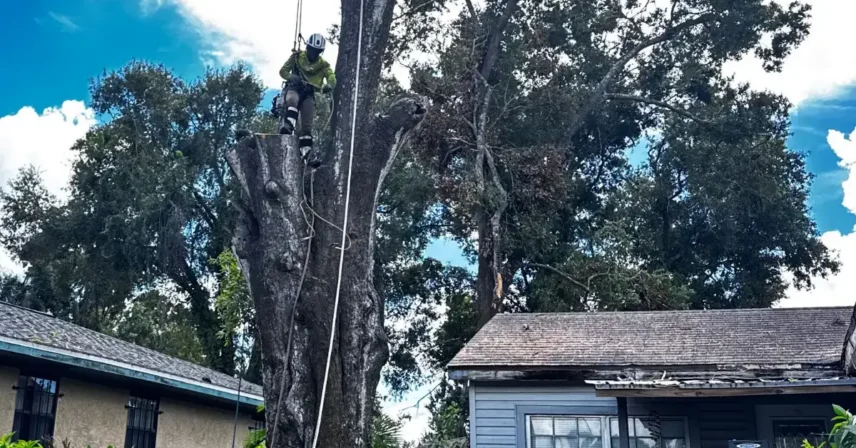
Wesley Chapel is one of Tampa Bay’s fastest-growing communities, known for beautiful master-planned neighborhoods with mature landscaping. If you own a home here, you’ve probably noticed something: trees are a big deal.
But what happens when you need to remove a tree? Maybe it’s dead, damaged by a storm, or posing a hazard. Can you just call a tree service and have it removed?
The answer is rarely simple in Wesley Chapel. Between Pasco County regulations, strict HOA covenants, and community design guidelines, tree removal here involves more rules than in almost any other Tampa Bay area.
Let’s break down exactly what Wesley Chapel homeowners need to know about tree removal so you can navigate the process successfully.
Why Wesley Chapel Tree Removal Is Different
Wesley Chapel isn’t like most unincorporated areas. Here’s what makes tree removal here unique:
Master-Planned Community Standards
Most Wesley Chapel neighborhoods are master-planned communities with:
- Recorded covenants and restrictions
- Architectural Review Boards (ARBs) or Architectural Control Committees (ACCs)
- Detailed landscape standards
- Specific tree protection provisions
- Design guidelines that exceed county requirements
These aren’t suggestions—they’re legally binding requirements that come with your property deed.
Multiple Layers of Approval
Tree removal in Wesley Chapel often requires navigating:
- Your HOA’s architectural review process (first step)
- Pasco County permits (if tree meets size/species thresholds)
- Community Management Company approvals
- Developer restrictions (in newer communities)
Higher Standards Than County Minimums
Many Wesley Chapel communities protect:
- Smaller trees than county thresholds
- More species than county regulations
- Trees in specific locations (common areas, sight lines, etc.)
- “Landmark” or “signature” trees regardless of size
Strict Enforcement
Wesley Chapel HOAs actively enforce tree regulations:
- Regular compliance inspections
- Neighbor complaint systems
- Fines for violations ($500-2,000+ typical)
- Liens on properties for unresolved violations
- Legal action in serious cases
Understanding Your Wesley Chapel HOA Tree Rules
Every Wesley Chapel community has different tree regulations. Here’s how to understand yours:
Step 1: Locate Your Governing Documents
You should have received these at closing, but if not, request copies from:
- Your HOA management company
- Community website (many post documents online)
- Pasco County Clerk’s office (recorded covenants)
Key documents to review:
- Declaration of Covenants, Conditions & Restrictions (CCRs): Primary governing document
- Architectural Guidelines: Specific design and landscaping standards
- Landscape Standards: May be a separate document
- Tree Preservation Plan: Some communities have specific tree plans
Step 2: Identify Relevant Tree Protection Provisions
Look for sections covering:
Protected Trees:
- Size thresholds (diameter requirements)
- Protected species lists
- Trees in specific locations
- “Specimen” or “landmark” tree designations
Removal Restrictions:
- When removal is prohibited
- When removal requires ARB approval
- Emergency removal procedures
- Dead/hazardous tree provisions
Approval Processes:
- How to submit requests
- Required documentation
- Review timelines
- Appeal procedures
Penalties:
- Fines for unauthorized removal
- Restoration requirements
- Legal remedies available to HOA
Step 3: Contact Your HOA Management
Before doing anything, call or email your HOA management company:
- Explain the situation
- Ask about the approval process
- Request application forms
- Confirm requirements and timelines
Common Wesley Chapel HOA Management Companies:
- HOMES (Home Owners Management Enterprises)
- STAR Community Management
- FirstService Residential
- Kuester Management Group
- WCI Communities (for newer developments)
Common Wesley Chapel Community Tree Rules
While every community is different, here are typical provisions we see in Wesley Chapel neighborhoods:
Trees That Typically Require HOA Approval
Size Thresholds:
- Trees over 12-18 inches diameter (stricter than county’s 24-inch rule)
- Trees over specific heights (varies by community)
- Any tree visible from the street
Protected Species:
- Oak trees (all sizes in many communities)
- Pine trees over certain sizes
- Palm trees (especially native species)
- Any tree designated as “specimen” or “landmark”
Location-Based Protections:
- Trees in front yards (often highly restricted)
- Trees on corner lots (visibility/sight line concerns)
- Trees near community entrances
- Trees in common areas or easements
When You Might NOT Need HOA Approval
Some communities allow removal without ARB approval for:
- Very small trees (under 6-8 inches diameter)
- Dead trees (with arborist certification)
- Immediate hazards (with proper documentation)
- Invasive species (Brazilian pepper, Australian pine)
- Trees inside rear yard privacy areas (varies greatly)
Important: Even if you think your tree qualifies for an exception, confirm with your HOA before removing it. Assumptions can be expensive.
Typical HOA Replacement Requirements
Most Wesley Chapel HOAs require replacement planting:
- Ratio: Often 1:1 or 2:1 (one or two trees planted per tree removed)
- Species: Usually must be native or approved species
- Size: Typically 3-7 gallon container minimum (larger than county requirements)
- Location: May specify front yard, side yard, or approved locations
- Timeline: Plant within 30-90 days of removal
- Survival: Must maintain and replace if tree dies within 1-2 years
The Wesley Chapel Tree Removal Process (Step-by-Step)
Here’s how to handle tree removal correctly in Wesley Chapel:
Phase 1: Assessment and Documentation (Before Contacting HOA)
Step 1: Evaluate the Tree
- Determine why you want it removed (dead, hazardous, diseased, etc.)
- Take clear photos from multiple angles
- Measure diameter at breast height (4.5 feet from ground)
- Note species if known
Step 2: Get Professional Assessment For trees you believe are hazardous or dead:
- Hire an ISA-certified arborist for evaluation
- Get a written report documenting condition
- Include photos in the report
- Get recommendations (removal vs. alternatives)
Cost: $150-400 for arborist assessment and letter
This documentation strengthens your case for HOA approval and may be required anyway.
Phase 2: HOA Approval Process
Step 3: Submit Architectural Review Request
Typical requirements:
- Completed ARB application form
- Site plan or survey showing tree location
- Photographs of the tree and surrounding area
- Arborist report (if claiming dead/hazardous)
- Justification letter explaining why removal is necessary
- Replacement plan (what you’ll plant instead)
- Application fee (varies, often $25-100)
Step 4: Wait for ARB Review
Timeline varies by community:
- Standard review: 2-4 weeks typical
- Expedited review: 1-2 weeks (for hazards, may require extra fee)
- Emergency removal: Some communities allow immediate action with post-removal notification
During review, the ARB may:
- Approve as submitted
- Approve with conditions (specific replacement requirements)
- Request additional information
- Deny the request
- Schedule a site visit
Step 5: Respond to ARB Feedback
If the ARB requests changes or additional info:
- Provide requested documentation promptly
- Consider their suggestions seriously
- Negotiate if you disagree
- Understand that ARB decisions are often final (though some communities have appeal processes)
Phase 3: County Permit (If Required)
Step 6: Determine If Pasco County Permit Is Needed
You need a county permit if:
- Tree is 24+ inches diameter
- Tree is a protected species (oak, pine, magnolia)
- Tree is in a conservation area or easement
- Multiple trees are being removed
Step 7: Apply for County Permit (If Needed)
Process:
- Submit application to Pasco County Development Services
- Include arborist report, photos, site plan
- Include HOA approval letter
- Pay permit fee ($50-150 typical)
- Wait 2-4 weeks for county review
- Respond to any county requests for additional info
Important: Get HOA approval BEFORE applying for county permit. The county may ask for proof of HOA approval.
Phase 4: Removal and Completion
Step 8: Hire Professional Tree Service
Once you have all approvals:
- Hire a licensed, insured tree service
- Confirm they understand replacement requirements
- Schedule removal
- Ensure they have copies of all permits
Step 9: Complete Removal
- Tree service removes tree per approved plan
- Stump is ground (usually required)
- Debris is removed
- Site is cleaned
Step 10: Plant Replacement Trees
- Purchase approved species in required sizes
- Plant within timeline specified (30-90 days typical)
- Install properly with appropriate soil, mulch, and staking
- Water and maintain per HOA requirements
Step 11: Submit Completion Documentation
- Take photos of replacement trees planted
- Submit completion report to HOA
- Get final approval/sign-off
- Keep all documentation for records
Wesley Chapel Tree Removal Costs (What to Budget)
Tree removal costs in Wesley Chapel can be higher than elsewhere due to:
- HOA compliance requirements
- Stricter cleanup standards
- Mandated replacement planting
- Multiple permit fees
Typical Cost Breakdown
Professional Assessment:
- Arborist evaluation and report: $150-400
HOA Fees:
- Architectural review application: $25-100
- Expedited review fee (if offered): $50-150
County Fees:
- Pasco County permit (if required): $50-150
Tree Removal Service:
- Small tree (under 30 feet): $400-1,000
- Medium tree (30-50 feet): $1,000-2,500
- Large tree (50-70 feet): $2,500-5,000
- Very large tree (70+ feet): $5,000-10,000+
Stump Grinding:
- Standard stump: $150-400
- Large oak or pine stump: $400-800
Replacement Trees:
- 3-gallon native tree: $50-100 each
- 7-gallon specimen: $100-200 each
- 15-gallon tree: $200-400 each
- Installation (if hiring landscaper): $100-300 per tree
Total Project Cost Examples:
Small dead tree, simple removal:
- Arborist report: $200
- HOA fee: $50
- Removal: $600
- Stump grinding: $200
- Replacement tree (7-gal): $150
- Total: ~$1,200
Large oak, complex removal:
- Arborist report: $350
- HOA fee: $100
- County permit: $150
- Removal: $3,500
- Stump grinding: $500
- 2 replacement trees (15-gal): $800
- Total: ~$5,400
Common Wesley Chapel Tree Removal Challenges
Here are specific situations we encounter frequently in Wesley Chapel:
Challenge 1: Trees Planted Too Close to Homes
Many older Wesley Chapel homes have trees that were planted too close to structures:
Common Issues:
- Roots damaging foundations
- Branches hitting roofs
- Trees blocking views
- Shade preventing lawn growth
HOA Perspective:
- ARBs are often sympathetic to these situations
- Documentation of damage strengthens your case
- Photos of foundation cracks, roof damage, or root issues help
- May require you to try pruning first before approving removal
Solution Approach:
- Get contractor or structural engineer documentation of damage
- Submit photos showing problems
- Propose appropriate replacement trees in better locations
- Consider phased removal if multiple trees involved
Challenge 2: Storm-Damaged Trees
Florida storms frequently damage trees in Wesley Chapel:
Emergency Removal Considerations:
- Some HOAs allow immediate removal of imminently dangerous trees
- Usually requires post-removal notification within 24-48 hours
- Must provide documentation (photos, arborist report)
- Still must follow replacement requirements
Important: “Damaged” isn’t the same as “imminently dangerous.” A tree with broken branches may not qualify for emergency removal—only trees posing immediate threats do.
Challenge 3: Developer-Protected Trees
Some newer Wesley Chapel neighborhoods have additional restrictions:
Developer Control Period:
- First 5-10 years, developer may control all landscaping decisions
- Even stricter than HOA requirements
- May prohibit removal of any substantial trees
- Developer approval required before HOA approval
Deed Restrictions:
- Some lots have specific tree preservation requirements recorded on deeds
- May protect individual trees permanently
- Check your title work
Challenge 4: Trees in Easements
Many trees in Wesley Chapel are in utility or drainage easements:
Additional Complications:
- Easement holder (utility company, county) may need to approve
- May have restrictions on what can be replanted
- Sight line easements (common on corners) may prohibit tall replacements
- Stormwater easements may require specific species
Challenge 5: Front Yard vs. Back Yard
Wesley Chapel communities often have different rules for different parts of your property:
Front Yards (Street-Facing):
- Strictest regulations
- Visible to community, affects curb appeal
- Often requires ARB approval for any tree removal
- Specific requirements for replacement species and locations
Side Yards:
- Moderate regulations
- May require approval for larger trees
- Corner lots often have stricter rules
Back Yards (Behind Privacy Fence):
- More lenient in some communities
- May not require approval for smaller trees
- Still subject to size/species thresholds
When Wesley Chapel HOAs Deny Removal Requests
ARBs can and do deny tree removal requests. Common reasons:
Insufficient Justification
“I don’t like it” isn’t enough. Denials often occur when:
- No documented hazard or damage
- Tree is healthy
- Minor issues that could be addressed with pruning
- Aesthetic preferences that conflict with community standards
How to Strengthen Your Case:
- Provide professional arborist documentation
- Document damage with photos and contractor reports
- Show you’ve tried alternatives (pruning, etc.)
- Demonstrate tree is dead, dying, or structurally unsound
Inadequate Replacement Plan
Denials occur when:
- No replacement trees proposed
- Proposed replacements aren’t approved species
- Replacement locations inappropriate
- Size/quantity insufficient
Solution:
- Propose appropriate native species
- Offer to plant more than minimum required
- Consult with landscape architect if needed
- Show you understand community landscape vision
Violation of Community Character
ARBs protect community aesthetic:
- Removal would create gaps in street tree canopy
- Tree is part of coordinated landscape plan
- Removal would affect property values
- Tree is a community landmark
Options:
- Propose alternative solutions (extensive pruning, cabling)
- Offer exceptional replacement landscaping
- Work with neighbors to coordinate landscape plans
- Consider long-term solutions vs. immediate removal
What to Do If Your Wesley Chapel HOA Denies Your Request
If your removal request is denied, you have options:
1. Request Reconsideration
- Ask for specific reasons for denial in writing
- Address concerns raised
- Provide additional documentation
- Resubmit with improvements
2. Explore Alternatives
- Would extensive pruning solve the problem?
- Can cabling/bracing address structural concerns?
- Is root pruning an option for foundation issues?
- Can you live with the tree if you redesign landscaping around it?
3. Negotiate Compromise
- Offer to plant additional replacement trees
- Propose phased removal (remove now, plant immediately)
- Suggest trial period with monitoring
- Offer to hire landscape architect for comprehensive plan
4. Appeal (If Your HOA Has Appeal Process)
Some communities allow appeals:
- Follow procedures in your governing documents
- Present case to board of directors
- May require additional fees
- Decision timelines vary
5. Seek Variance or Exception
For unique circumstances:
- Request formal variance hearing
- Present documented hardship
- Show good faith efforts to comply
- May require attorney assistance
6. Legal Review (Last Resort)
If you believe denial is unreasonable:
- Consult attorney specializing in HOA law
- Review whether denial violates governing documents
- Consider mediation or arbitration
- Understand that litigation is expensive and time-consuming
Reality Check: Courts generally uphold HOA landscaping decisions unless they’re arbitrary, capricious, or violate governing documents. Legal action should be a last resort.
Grand Oaks’ Wesley Chapel Tree Services
At Grand Oaks Tree Service, we specialize in helping Wesley Chapel homeowners navigate the complex tree removal process:
HOA Compliance Assistance
We help with:
- Documentation preparation for ARB submissions
- Professional arborist reports for hazardous or dead trees
- Site plans and photographs meeting HOA requirements
- Guidance on HOA-specific requirements for major Wesley Chapel communities
- Communication with HOA management on your behalf
Assessment and Alternatives
Before committing to removal:
- Free property consultations for Wesley Chapel residents
- Professional tree health evaluations
- Alternative solutions (pruning, cabling, treatment)
- Cost-benefit analysis of removal vs. preservation
Complete Removal Services
When removal is necessary:
- Permitted, compliant removal meeting all HOA and county requirements
- Stump grinding to HOA standards
- Complete debris removal and cleanup
- Property protection throughout the process
Replacement Planting
We help with mitigation:
- Recommendations for appropriate native species
- Professional installation of replacement trees
- Proper planting techniques ensuring tree survival
- Initial care instructions to meet HOA maintenance requirements
Emergency Tree Services
For storm damage:
- 24/7 emergency response throughout Wesley Chapel
- Documentation for insurance and HOA
- Emergency removal of hazardous trees
- Post-storm HOA notification assistance
Tips for Success with Wesley Chapel Tree Removal
Based on hundreds of projects in Wesley Chapel communities:
Do:
- ✅ Review your HOA documents thoroughly before doing anything
- ✅ Contact HOA management early in the process
- ✅ Get professional arborist assessment for dead/hazardous trees
- ✅ Submit complete, well-documented applications
- ✅ Propose generous replacement plans
- ✅ Be patient—processes take time
- ✅ Keep copies of all correspondence and approvals
Don’t:
- ❌ Remove any tree without HOA approval (even “small” ones)
- ❌ Assume county permit is all you need
- ❌ Rush the process or skip steps
- ❌ Get defensive with ARB members
- ❌ Hire tree services before getting approvals
- ❌ Ignore replacement requirements
- ❌ Assume your neighbor’s approval means yours will be approved
Ready to Remove That Tree the Right Way?
Grand Oaks Tree Service makes Wesley Chapel tree removal stress-free. We know the communities, understand the HOA requirements, and guide you through every step.
Our Wesley Chapel Promise:
- Free initial consultations
- Expert guidance on HOA requirements
- Professional documentation and reports
- Compliant removal services
- Replacement planting assistance
- Full follow-through to project completion
We serve all Wesley Chapel communities including Meadow Pointe, Seven Oaks, Cypress Creek, Quail Hollow, Saddlebrook, Seven Oaks, and throughout Pasco County.
Contact Grand Oaks today or call for your free Wesley Chapel tree removal consultation.